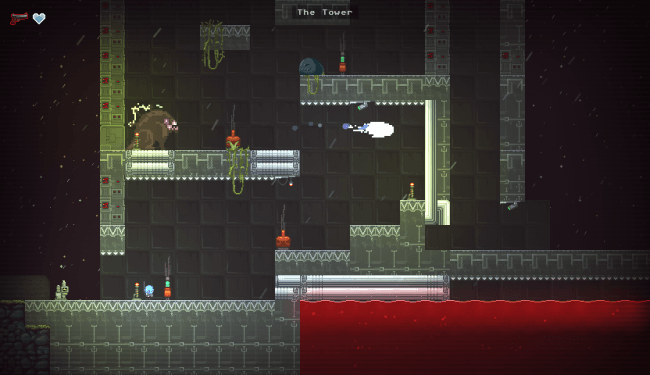
Puzzle games are meant to be challenging and confounding, but recently they've been making my brain get all twisted in a couple of different ways. The first, most obvious culprit, are the in-game puzzles themselves. Second, trying to figure out how the heck developers make these games. Not in the technical 1's and 0's way, but more in the design. How do you come up with a tricky puzzle? Work backwards? Trial and error? I have no idea. When a game comes along as elegantly designed as Vessel, it basically just sends my head popping off my shoulders.
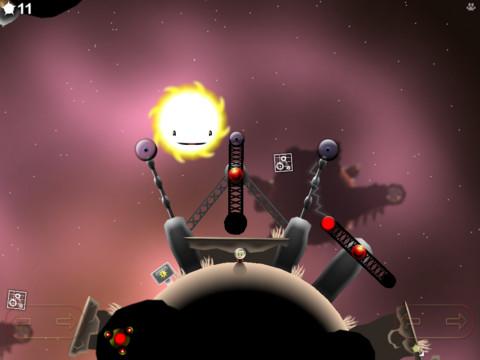
In Incoboto you play as Inco, and he's all alone. Not just alone on his planet, but seemingly throughout the entire galaxy. Here and there suns have been burning out, no longer providing life-giving warmth and light to the planets orbiting them. Now, there's only one sun remaining who goes by the name Helios. He's come to have Inco track down and feed him stars to help him re-light the dead suns and bring life back to the galaxy. Why is a sun stopping by, talking to a boy and demanding to be fed? Dunno, but just go with it.
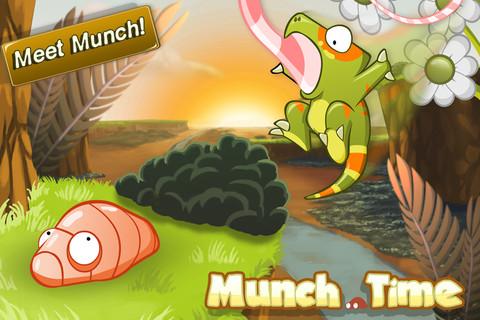
Munch Time for the iOS is a cute physics-based platform puzzler with amusing visuals, deceptively simple challenges, and a surprisingly versatile lizard tongue. Easy to pick up but difficult to master, the only real problem with the game is that it's done with quickly.
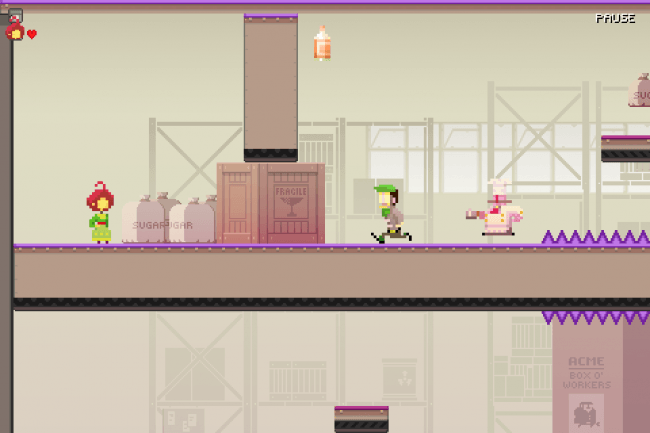
Owning a lemonade factory has long been a dream for many of America's youth, if stereotypical lemonade stands mean anything. Developer Initials is planning to release an iOS game where the goal is just that. However, the name of the game seems to be somewhat misleading. There certainly is a lemonade factory, and it may very well be super, but this game looks to be about much more than a sweet and fruity drink.
When you read the description of Burger Joint in the App Store they claim their game is the result if you "smashed Tetris and Bejeweled together," but that's a lie. In fact, Burger Joint is a direct imitation of the old NES and Gameboy title Yoshi, but without most of the fun and whimsy. This is a game which could have picked up the puzzle game mantle and done neat things with it, but instead opted to take the lazy way out and thus suffers for it.
The biggest problem I run in to when I'm trying to write a game review is when I don't want to stop playing the game long enough to actually write the review. You would think the biggest problem is when I'm enjoying a game so much that I lose track of time and forget to eat or sleep, but no. It's the writing. You see what I go through for you people?
From The Little Engine that Could to The Mighty Toaster, machines and appliances sometime face just as many challenges as we sentient humans. Challenges like, y'know, turning on lights in a room. In 1000 Amps, a cute little electrical plug is not only tasked with brightening up his dark environs, but he also joins the ranks of other mechanical doo-dads and household gadgets that have been recruited to save the day. Luckily for you, Plug's journey through a black-and-white not-world of light-up squares and musical sound effects is an engaging trek full of far-flinging leaps and ever-changing puzzles.
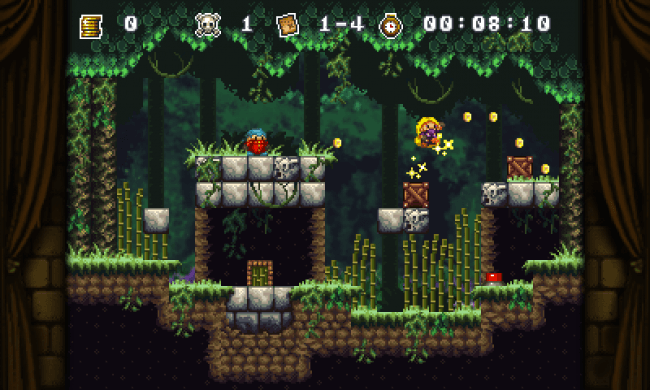
The deepest, darkest regions of the world are still brimming with slumbering treasures that are just waiting for an adventurous hero (or two) to uproot them and claim them as their own. So goes the premise for Wyv and Keep: The Temple of the Lost Idol, an independently-developed puzzle-platforming game for the PC, Mac, and Linux.


![All VV Ultimatum Titles [How to Get]](/wp-content/uploads/2026/06/vv-ultimatum-titles.jpg "All VV Ultimatum Titles [How to Get]")