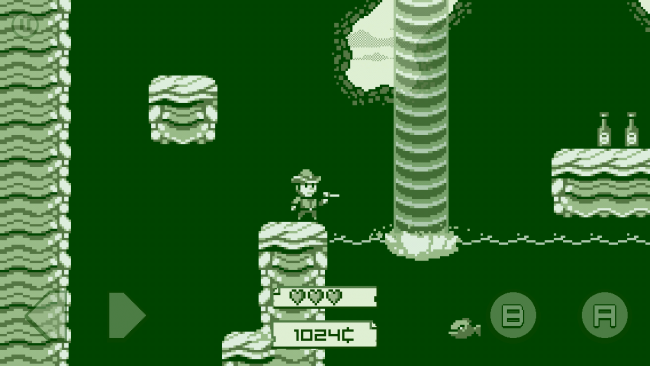
At its most basic, 2-Bit Cowboy is the lost Game Boy platformer you're hoping for. With tight controls, great level design, and monochromatic visuals, you can play this as the simple "let's head for the exit, cowpoke!" game that it seems to be at first glance. Scratch a little deeper though, and you'll find that 2-Bit Cowboy is a whole lot more.The platforming itself is tight, and despite a total lack of physical buttons, this is a spot on representation of the vintage 1989 experience the developers were clearly after. Layered on top of this is a collection of missions that forces players to explore every last nook and cranny of a level if they want to earn the most coins.Starting these missions requires a bit of exploration too, as they're found on wanted posters scattered throughout the level. You'll face goals like "destroy all the bottles" or "stop the gang," and while the objectives won't change much from stage to stage, each level is so well designed that you won't mind hunting for every last scorpion again.
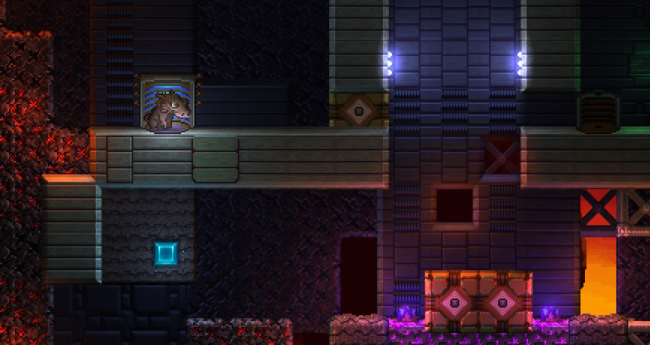
Full Bore comes out of the gate looking like just another retro-platformer, and within the first few minutes of play I was already cooking up various "fully boring" puns to use in this review. But then I noticed that an hour had flown by, and then another, and I realized I'd been pulled into the mystery of its strange underground world - and that there's a lot more to this game than first meets the eye.You play Full Bore as either Hildi or Frederick, slightly high-strung boars enjoying a dreamy nap on a warm summer's day. But fate has decided that this day will be more interesting than most, and before you know it you're cast into the bowels of a bizarre, subterranean realm, where you're accused of stealing a hoard of gems belonging to what is apparently a great boar mining magnate. Irritated by your impertinence, he sets you to work in his mine, digging up gems to replace the ones he (mistakenly) believes you've stolen.
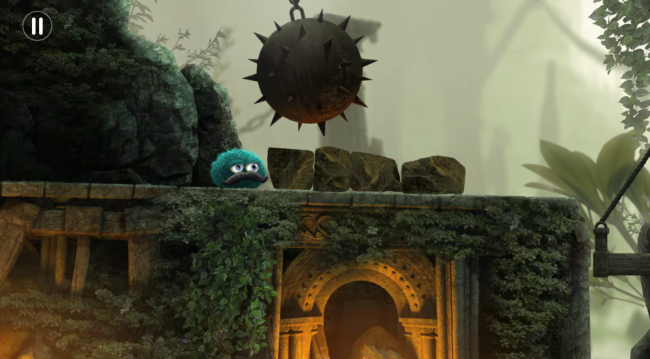
Leo's Fortune is gorgeous. That's what most of the feedback on the App Store focuses on. It's true, too.The game is textured with what doesn't look like photorealistic grass and stone, but photorealistic fake grass and stone. It's like someone took your friend's meticulously plastered Warhammer terrain -- sprinkled with fake grass shreds and molded rock -- laid it on its side, and through sympathetic magic, morphed it into pixels.The titular Leopold swoops, slides and floats between these artificial artifices. Your left thumb determines right or left momentum, while the right inflates or dives our fuzzy, mustachioed protagonist.
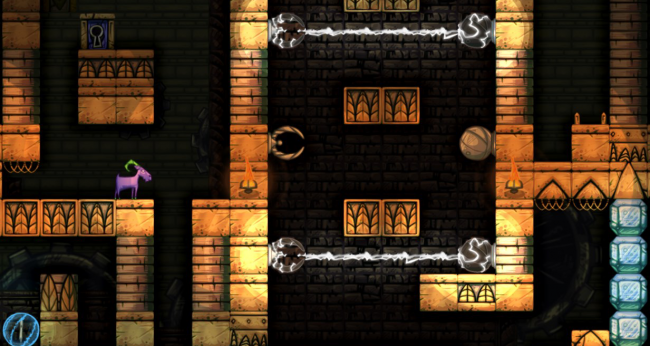
Released in late 2011 for the Xbox 360 and then in the summer of 2012 for the PC, Escape Goat was a quirky puzzle-platformer about both a goat imprisoned in a deadly, trapped-filled dungeon for the crime of practicing witchcraft, and an immortal, magical mouse who helps him escape. Quirky, and also very good if you like that sort of thing, although not particularly easy on the eyes: I noted in my review that the retro-style graphics were "adequate for the task but not much else."Escape Goat 2 is "problem solved," as they say. It's essentially the original Escape Goat all over again, but with more puzzles - more than 100 in total - and a very pleasing visual update. The Goat is back, imprisoned again along with his magic Mouse buddy and a flock of not-terribly-motivated sheep, this time deep within the Stronghold of Toragos. None have ever escaped - but you're the Escape Goat!
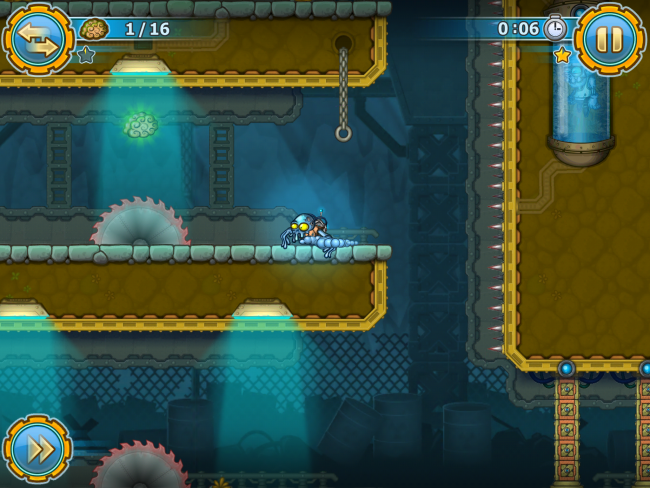
"Pay-to-win": it's hardly a death knell for most mobile games, as it's quite easy to find people with more money than time and a poor sense of where to spend either one.Deadlings certainly isn't the most egregious such game, but it hardly gets a pass.Death (as in the Grim Reaper) is unsurprisingly lonely. After seeing potential friendship in the equally unwanted zombies of the world, he tries to win their companionship by running them through a gantlet of deadly traps, platforms and obstacles at his new business, Deadlings, Inc.The elevator pitch is something like Jetpack Joyride meets Lemmings. You play as Death, guiding different classes of endlessly running zombies through test chambers, collecting brains and making for the exit.
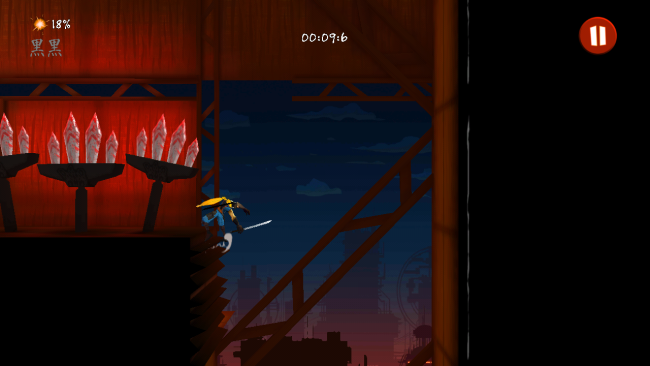
The movement of a ninja needs to be tight, swift, and precise with each delivery. There's no use in sticking to the shadows and sneaking up on your enemies if they're going to be able to disarm you and discard you without a second thought. That's why any ninja-based game on a mobile touchscreen device is a gamble - it's tricky enough as it is to make a platforming game feel right on a touchscreen, so to recreate the feel of stalking your prey as a ninja is really rather difficult.Remarkably, new ninja-based platformer Shadow Blade manages it with grace. While the controls feel a little unorthodox to begin with, they quickly prove ambitious and well considered, with flicks and gestures becoming your window into a world of great set-pieces, wall-jumping, blood-spewing, and rushes to the finish.You play as a ninja student who is attempting to return to his master with important information. Unfortunately there are numerous obstacles and enemies standing between points A and B, and he's going to need to hack and slash his way through the lot of them. Of course, that can only be good news for us - I mean, we need some baddies to make this fun, right?Shadow Blade wants you to feel slick. To this end, the game comes with a control scheme that's a little bit different - you can opt for the regular d-pad style controls, but you'll want to go with the gesture and swiping control set, because it feels really damn good once you properly get into it.
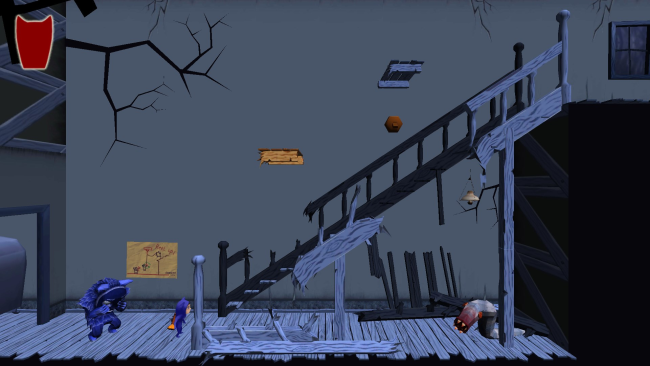
My Fear and I is a side-scrolling puzzle-platformer about the existential travails of Sebastian, a seven-year-old lad who is very literally plagued by Fear: a large, oafish, and perpetually whiny creature that bears something of a passing resemblance to Sulley of Monsters Inc. fame. It's an interesting idea, but it ultimately falls well short of its potential thanks to a wonky control scheme that renders the game far more frustrating than fun.Young Sebastian is confused and frightened by the world around him, and clearly finds no comfort in his parents. But he's also tired of living in fear, and so one night, ignoring the dire warnings of his Fear, he steels his resolve, grabs his trusty plunger/grapple gun, leaves his bedroom and embarks upon an adventure into the unknown.The 2D world through which he and his Fear travel is dark and bizarre, with a sort of Tim Burton ambiance to it; but it's also almost entirely static and non-interactive. There are a few pictures hanging from the walls that can be looked at, but the vast majority of the environments are pure window dressing - a disappointment given the promise of dark secrets and manifest neuroses hidden in the many nooks, crannies, and shadows.
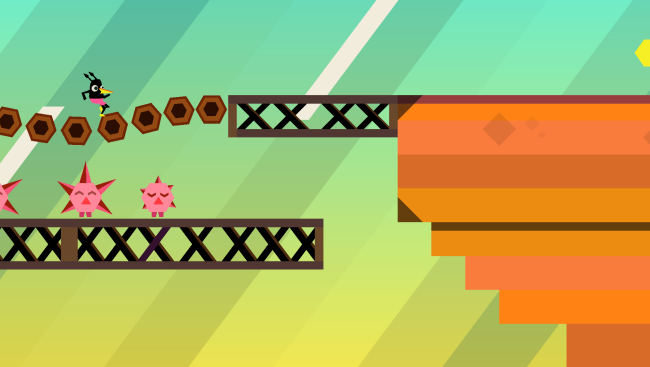
Sound Ride is a level-based runner that draws inspiration from the BIT.TRIP Runner series. Its abstract and colorful world, quirky characters, and catchy, upbeat music combine to create an environment that's a pleasure to traverse. Unfortunately, inconsistent physics and a limited amount of gameplay cause many of those trips to be repetitive, frustrating, and less enjoyable as a whole than its individual, charming parts.Those trips will be made as Kiwi, a bizarre bird-man scientist in hot pink track shorts. Kiwi accidentally altered the time-space continuum and can now run faster than light—which he must do to avoid dying. Each of Sound Ride's current 20 stages sees Kiwi running against a throbbing, colorful backdrop that changes hues as he progresses. Strange contraptions, like electrical towers and flashing, stilted robots, dot the otherwise sparse, but appealingly geometric landscape. "Most of Kiwi's time in this world is spent jumping over obstacles and one-hit dangers, like spiked hurdles and hungry alligators. Players have only two moves at their disposal: jump and double-jump (performed by jumping mid-air). Timing is critical as many obstacles are placed at such specific distances from each other that only one type of jump will suffice. For instance, double-jumping over an object that has another danger immediately behind it will cause you to land on that second hazard and die. While this adds another layer of challenge and required dexterity to the game, it also results in many just-misses that will repeatedly send Kiwi back to the beginning—or halfway checkpoint—of the level when he inevitably hits an unexpected snag. The frequency of death in Sound Ride is multiplied by two other issues: a limited view of what's ahead and an inconsistent physics engine. There are many hills and cliffs scattered throughout each stage that add depth to the run, but the camera does not lead beyond Kiwi's current position. This means that whatever is at the crest of a hill—usually an enemy—is impossible to see until you're right on top of it.


![Hololive Dreams Tier List [Best Cards]](/wp-content/uploads/2026/07/hololive-dreams-tier-list.jpg "Hololive Dreams Tier List [Best Cards]")


![Iron Soul Dungeon Weapon Tier List [Best Weapons]](/wp-content/uploads/2026/07/iron-soul-dungeon-weapon-tier-list.jpg "Iron Soul Dungeon Weapon Tier List [Best Weapons]")