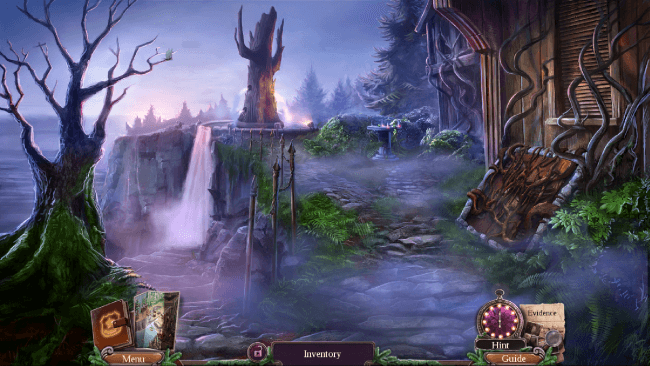
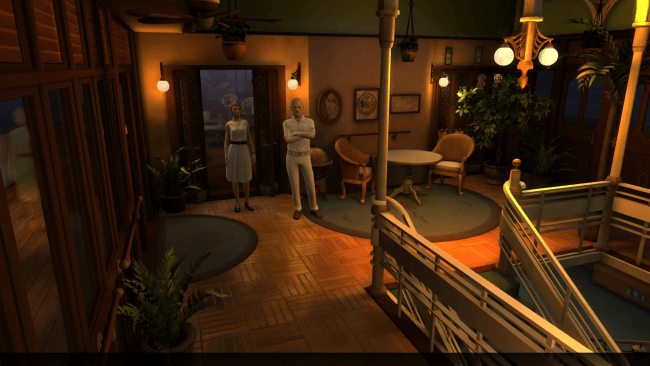
A direct sequel to Enigmatis: The Ghosts of Maple Creek, Enigmatis: The Mists of Ravenwood lets us put on the detective badge once again in a wonderful tale of intrigue and hidden object adventuring. On her continued search for the demonic preacher who eluded her at the end of the last game, our fearless detective comes across a frightened young girl named Becky at the edge of a campground. The detective's search for the little girl's parents ultimately leads her into the happy and idyllic campgrounds of Ravenwood, although everything is certainly not as it seems before long: from the oh-so-cheery camp workers, to the way the world seems to shift into darkness at regular turns, and of course, let's not forget the barrels of dead bodies and giant shadowy raven that tends to stop by from time to time.The game's presentation is particularly top-notch, with wonderfully painted visuals and smooth animations, not to mention impressive 3D character models that work like magic in the many engrossing cutscenes. What's great about this game is that The Mists of Ravenwood completely owns up to its rustic campground setting, and everything beyond it makes logical sense within the overall constraints of its own uniquely crafted world. Areas like the logging cabins, a giant tree that you can walk inside of, and even a short detour to the rocky beach below all feel realistic and connected, and you'll never veer off into that oversaturated futuristic temple that seems to make an appearance at the end of almost every hidden object adventure game these days."The Mists of Ravenwood does a lot of things that go the extra mile towards making the overall experience feel like so much more than your typical hidden object adventure. The most welcome of these features are in the deductions that your character can make by strategically placing found pieces of evidence on an investigative bulletin board of sorts (you are a detective after all!). While it's really just a matter of dragging the different evidence items over one of the various plot point circles until you find a match, it's still an extremely nice way of advancing the plot and giving players a nice refresher course at regular intervals as to what the underlying mysteries are.
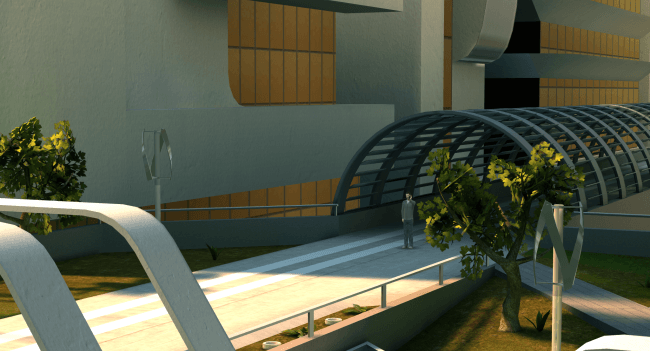
Lost Echo is a modern point-and-click adventure in every sense of the word. Its near-future setting focuses on technology over fantasy, presenting even mysterious occurrences as explainable scientific phenomena. Puzzles emphasize logical conclusions instead of random item combinations, and its streamlined gameplay allows players to concentrate on the stunning world around them rather than hunt-and-peck quests for things they'll never need again. Beside its modern upgrades, though, Lost Echo is missing some of the heart that defines the genre: its characters and plot feel rushed and incomplete, able to carry us through to the end but not fitting of the otherwise immersive game they exist within.Which is a shame, because Lost Echo's story starts off strong. Greg, our protagonist, meets his girlfriend Chloe at Highway Park. After a very brief introduction with little time for filler, a bright light suddenly fills the park, and Chloe vanishes as Greg passes out. Greg awakens in the hospital and is informed by his close friend Tom that an arc flash occurred, and most visitors to the park were knocked unconscious. Insisting that he's fine, Greg inquires about Chloe; Tom responds that he's never met this "Chloe," Greg's long-term girlfriend that Tom has had dinner with numerous times. Confused but unable to make sense of the situation from the hospital, Greg shrugs it off and decides to seek out Chloe once he's back home in their shared apartment."At home, Greg quickly finds that Chloe has essentially been erased from his life: pictures of her are missing from their apartment, a birthday card she gave him is now signed from his mother, and any trace of Chloe even existing is impossible to find. What follows is Greg's attempt to uncover what happened to Chloe, piece together the events in the park, find her and return life to normal. The strange events that surround Greg are a fantastic pull into the world of Lost Echo; from only a few minutes into the story, players are presented with a mystery that will guide the rest of their actions. Chloe's disappearance is surreal yet weighted in science, as is the major plot change encountered around the halfway point.
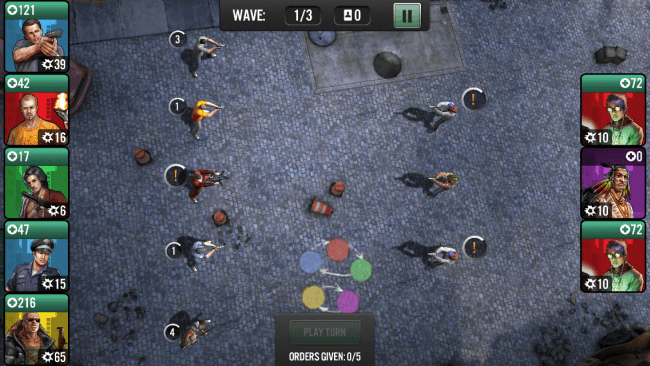
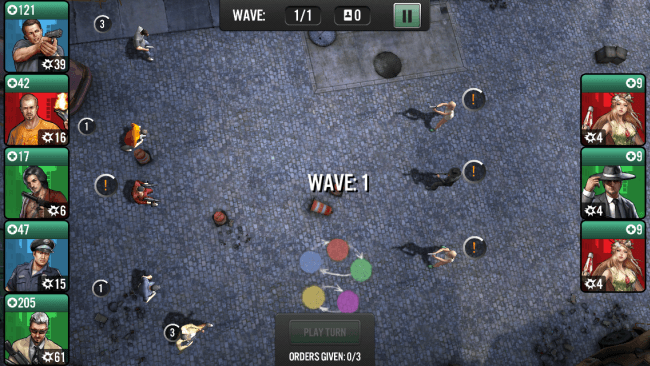
So much of Gang Lords seems derivative. Players collect a menagerie of character cards, upgrade and evolve their forces, and create a team of the most powerful gangsters they can find so that they can decimate the opposition. It's a lot of the kinds of things we've seen before, really. The thing is, while it's a familiar setup, the actual gameplay feels refreshingly complex.The management side of things in Gang Lords should feel pretty familiar to many freemium gamers. Cards can be leveled up in the usual manner: by sacrificing low-end feeders and spending a little in-game cash. Evolutions require fully leveled cards and special supplemental evo cards. Other players can be recruited for a fight so that their Leaders can join in the fun. And, of course, there's an energy mechanic that prevents players from picking too many fights at once."The fights are something else entirely, though. Two gangs square off on opposing sides of the screen and players have to make careful use of their characters in order to come out on top. There's an admittedly familiar rock-paper-scissors mechanic at play that allows Green cards to trump Blue, Blue to trump Red, and so on; but there's a lot more to it than that. Each gangster has a set number of turns they have to wait between attacks, and this value can vary greatly. At the same time, players can sacrifice a card's turn to "support" another, giving it an attack/defense boost and knocking one turn off their activation counter. It's this support mechanic that makes a huge difference in how one tackles each fight.
Gang Lords is a free-to-play collectible card game created by Glu. It's an interesting hybrid of card collecting and the sort of mission system that's usually affiliated with other more puzzle and, oh say, dragon-like games. Gamezebo's quick start strategy guide will provide you with detailed images, tips, information, and hints on how to play your best game."
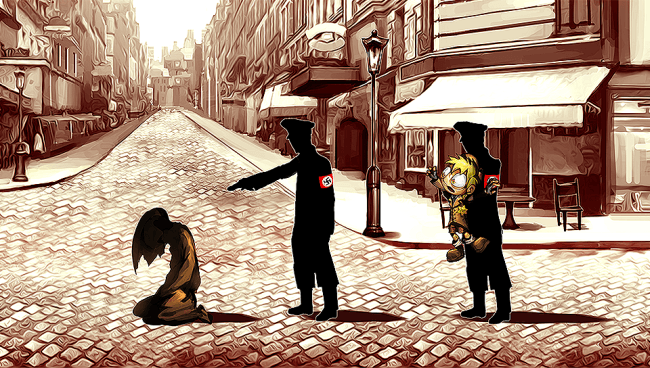
For decades, video games have provided players an escape from the challenges and tragedies of the real world. Whether we're searching for a reprieve from everyday stressors or a way to live out unattainable fantasy goals, games have filled that need. In recent years, we've seen an increase in gaming experiences that aim less to strictly entertain and more to inform, educate, and empathize: titles like Actual Sunlight and That Dragon, Cancer offer interactive opportunities to explore the personal, emotional topics of depression and illness, respectively. Papo & Yo confronts the demons of alcoholism. And soon, Imagination Is The Only Escape will provide a new way for modern players to remember the Holocaust: through the eyes of a child."Creator and director of Imagination Is The Only Escape, Luc Bernard, aims to craft an authentic and haunting portrayal of France's Nazi occupation in 1942. The story will follow a young Jewish boy named Samuel and begin just before the Nazi invasion; his life is normal at this time, filled with friends and schoolwork, the normal events of youth. This soon changes, though, during the Vel' d'Hiv Roundup and mass arrest of Jews in Paris: Samuel's mother encourages him to flee the city and find sanctuary with a Catholic priest, but she is shot and killed during their escape. In one instant, Samuel's life—and that of all Parisians—changes dramatically.
The final episode of The Raven - Legacy of a Master Thief has arrived, and all the secrets of the greatest thief Europe has ever seen are finally laid bare! The third chapter in this international adventure doesn't finish quite as strongly as the first part began, but the payoff is definitely worth the effort.The Raven - Legacy of a Master Thief isn't your conventional video game. Set in 1964, it's an Agatha Christie-style romp across Europe and into Egypt, starring a paunchy Swiss police constable searching for relevance in his declining years, a gentleman master thief who's taken a mysterious turn to vicious violence, his young, idealistic protégé, and a colorful supporting cast including an obsessed French police inspector, a German doctor with a dark secret, an Italian ship's captain left broken by two wars, and many others. It's interspersed with puzzles, as adventures generally are, but there's no question that in The Raven, the story's the thing."(Oh - There are spoilers within. Consider yourself warned!)
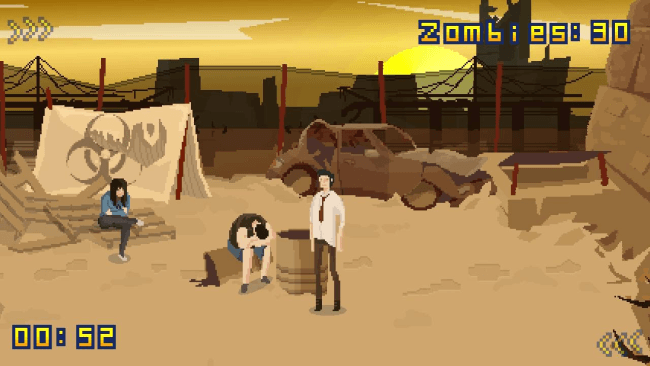
There's a real helplessness to the entire ordeal that is Once Upon An Apocalypse. It's the sort of feeling that you might hope to expect from a game that bears such a title, but the bleakness isn't really of an end-of-the-worldly nature - rather, this is a moody, all-hope-is-lost experience simply because it never really feels like you're given the appropriate tools to survive.Oh, there is a way to survive Once Upon An Apocalypse with all your camp-mates intact, make no mistake - but it all feels so random and closed in that making any sense out of your actions is essentially a case of repeating the game over and over again in a trial-and-error fashion. This is an adventure game, then, which is less adventure, and more touching random things until the helicopter comes to take you away."It's all about zombies, of course - the undead who have ravaged the land and eaten anyone in their path. You are "Skinny," a ruffled man in a shirt and tie who is just one of a handful of survivors. You've set up camp in a safe-ish spot, and somehow managed to nominate yourself as the leader of the group. No one appears to have a problem with that.
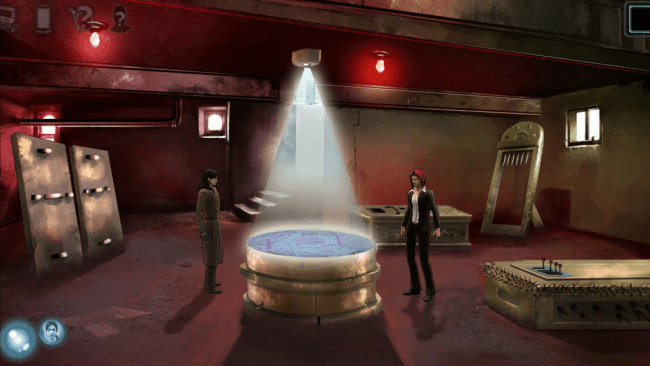
The fourth and final episode of Cognition: An Erica Reed Thriller is finally here! Does the last piece of the puzzle deliver a chillingly satisfying conclusion and live up to the potential that's been growing over the previous three chapters? Well, no, not really - but there's enough to it that it's worth talking about anyway. Read on!If you've been following along, you already know all you need to know about the graphics, sound, voice acting, and mechanics of Cognition: An Erica Reed Thriller. (And if you haven't, episode four is definitely not the place to jump in - go back to part one and start from there.) In that regard, The Cain Killer is more of the same, with the addition of a new mechanic: your conversational choices now have an impact on how much other characters like and trust you, and therefore how they react to you - and how the game ultimately plays out. Say the right thing and the ghostly face of your conversational partner in the lower-right corner of the screen will slowly fill up with light; say the wrong thing and it will drain out."It's an interesting idea, and obviously it's smart to be on good terms with everyone, but in a practical sense it really doesn't add anything to the experience. Conversational options are almost always binary - "I agree with you/I disagree you with" kind of thing - and there's never any doubt about which one will score the brownie points, nor pressure (or any reason at all) to opt for the negative choice. By the time the game was over I was effectively BFFs with virtually everyone in the game, including a lunatic serial killer and my boss at the FBI.


![All VV Ultimatum Titles [How to Get]](/wp-content/uploads/2026/06/vv-ultimatum-titles.jpg "All VV Ultimatum Titles [How to Get]")