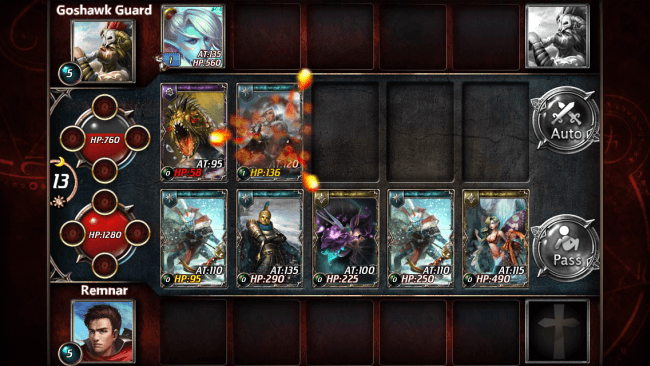
Back in January, I reviewed a game called Lies of Astaroth. I liked it quite a bit despite there being a few issues with progression, energy management, and a bothersome menu system. Why am I bringing that up? Because Elemental Kingdoms is the exact same game. No, really, it's the exact same game as Lies of Astaroth. The only difference is a visual overhaul and some new audio.That's not to say that there's anything inherently shady going on here, though. After doing a little digging, I was able to find out that Perfect World and iFree Studio have actually been working together on Elemental Kingdoms; so while the original developer's name isn't on "the box," they were still very much a part of the game's creation. At the very least, it's not something to worry about from a legal standpoint."Elemental Kingdoms is every bit the mobile CCG as its almost-twin. Players gather cards, create decks, enhance their favorites by sacrificing lowbies and a little cash, and then square off against NPCs and other players. There's something of a story here as well, which requires steadily fighting through several different areas of increasing difficulty in order to advance. Each section of the world is loosely themed as well (swamp, tundra, etc.), and the cards used by enemies tend to match their elements, which is something worth considering before blindly jumping into a boss fight.
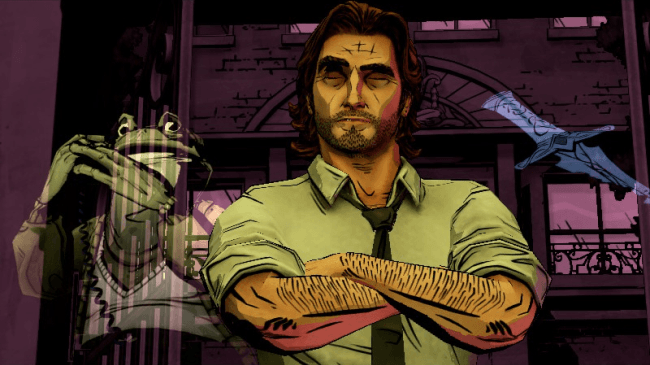
Episode 1 of The Wolf Among Us is a point-and-click adventure game created by Telltale Games. In this game, you take on the role of Bigby Wolf, a tough law enforcer who tries to keep the peace among New York's fantastic population of "Fables." Gamezebo's walkthrough will provide you with detailed images, tips, information, and hints on how to play your best game."
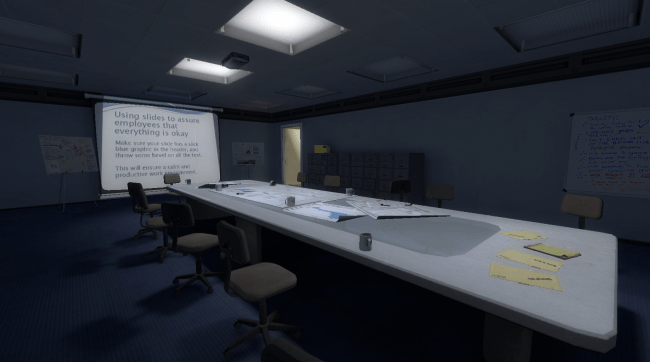
This is the story of a man named Stanley. Stanley worked for a company in a big building where he was employee number 427. Employee number 427's job was simple - he sat at his desk in room 427, and he pushed buttons on a keyboard. Orders came to him through a monitor on his desk, telling him what buttons to push, how long to push them, and in what order. This is what employee number 427 did every day of every month of every year, and although others might have considered it soul-ripping, Stanley relished every moment that the orders came in, as though he had been made exactly for this job. And Stanley was happy.And then one day, something very peculiar happened. Something that would forever change Stanley. Something that he would never quite forget. He had been at his desk for nearly an hour, when he realized that not one single order had arrived on the monitor for him to follow. No one had showed up to give him instructions, call a meeting, or even say "hi." Never in all his years at the company had this happened - this complete isolation. Something was very clearly wrong. Shocked, frozen solid, Stanley found himself unable to move for the longest time. But as he came to his wits and regained his senses, he got up from his desk and stepped out of his office."All of his co-workers were gone. What could it mean? Stanley decided to go to the meeting room - perhaps he had simply missed a memo. When Stanley came to a set of two open doors, he entered the door on his left, the utterly perfect narration for his outlandish, sprawling tale working in unison with the first-person perspective to create one of the most charming, story-driven video games ever created.
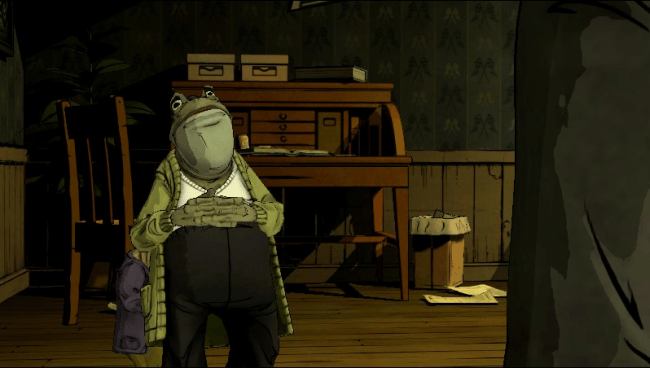
A notable point on the lengthy list of sins committed by substandard series like Twilight and The Mortal Instruments is that stories about supernatural beings living amongst us now feel exclusively like the domain of bad teenage drama. In other words, sparkly vampires and the sneering teenage smart-asses that hunt them through city streets may immediately put you off the "modern fairy tale" premise for Telltale Games' The Wolf Among Us.Don't let that happen. The Wolf Among Us, based on Veritgo's long-running comic series by Bill Willingham, is sharp, funny, and full of intrigue. You'll be hooked the second Mr. Toad claps his bulbous eyes on the main character and hisses, "Shit.""The Wolf Among Us: Episode 1 - Faith is an episodic adventure game by Telltale, who has already demonstrated that they're really good at this sort of thing through The Walking Dead. You roam the foul streets of '80s-era New York as Bigby Wolf, a detective/policeman who's employed to help keep things peaceful amongst New York's population of Fables."Fables" are refugee characters from fairy tales who've been shoved out of The Homelands and forced to relocate in New York State. Bigby Wolf, once known as a certain "Big Bad," is primarily concerned about making sure the Fables living in New York City's Fabletown keep a low profile and a human guise. However, things take a violent turn one day, and Bigby finds himself responsible for solving the gristly murder of a certain Fable.
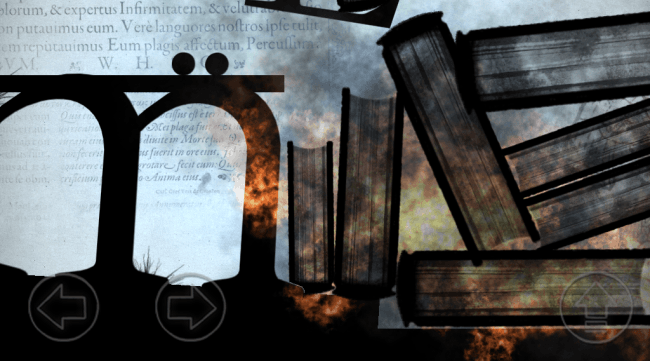
They say a picture can be worth a thousand words, but as I've learned already this week, a mobile game can sometimes speak for centuries. I have a long personal history with words and different types of fonts myself: after all, I read, write, and edit articles all day long here at Gamezebo, and then by night I take graduate courses about the publishing industry. So the idea of a Limbo-like mobile game that focused on the entire history of typography, and that let you play as two punctuation marks no doubt, seemed more than right up my alley. And luckily, writing fanatic or not, Type:Rider serves to provide one of the most whimsical and artistic adventures you're likely to ever experience on a mobile game device today.For such a relatively short game, the sheer amount of variety in Type:Rider is simply astounding, and each level serves as a wonderful visual homage to a different era in the history of typography. Throughout the course of your journey towards the modern day of typing, you'll experience the whirling mind work and ideas concurrent with the Didot period; you'll ride mine carts and dodge the bullets of a Wild Western shootout in the Clarendon era; you'll traverse an industrial world of grinding gears and churning typewriters by the time you get to Times New Roman; and you'll ski down the marvelous snowy white slopes in front of a blood-red sky during the Helvetica chapter."These are just a few of my many favorite moments throughout my Type:Rider adventure, and I was constantly amazed at every turn by how rich and engrossing the slight changes in scenery managed to be, and how the letters themselves were always incorporated into the platforming segments in fresh and exciting new ways. Although the bulk of Type:Rider is more about the experience, rather than the gameplay, you'll still be met with a few nice platforming sections and the occasional interactive puzzle or two: the latter of which are always extremely unique, and involve you getting a third white circle into a three-pronged ground slot, along with your two controllable punctuation marks.
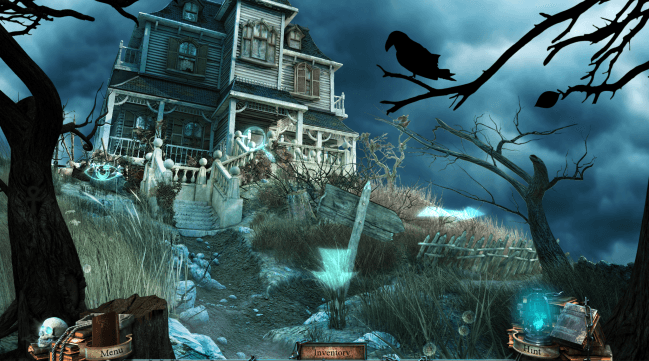
Hidden object games are best-suited for desktop computers, mainly because a large part of the gameplay involves searching densely-packed, highly-detailed scenes - a task that's clumsy to perform on a smaller screen. Moreover, the complex puzzles of adventure games are also better-solved with a mouse than with touchscreen controls. Haunted House Mysteries for iPad is a nice-looking game that suffers by appearing on an inappropriate platform.As so many hidden object adventures do, Haunted House Mysteries begins with a terrible tragedy. A famous archaeologist and his family are murdered in their New England vacation home, presumably because of a rare artifact being kept there. Years later, Nancy, a young graduate student writing a thesis on modern-day superstition, is called to the home by her elderly aunt. On the surface, the invitation is for Nancy to enjoy a few days' R&R, but she soon discovers her aunt's true intention is for her to investigate the site's alleged paranormal activity."Haunted House Mysteries was obviously made by a team of talented artists, since from the first spooky scene it makes a good impression. Nancy and her aunt are sharp and attractive by design, and so are all of the game's locations. (I'm fairly sure the exterior of the main house is the Norman Bates Psycho house.) The game also sounds pretty good thanks to a nice music score that effectively augments the lugubrious Victorian interiors.
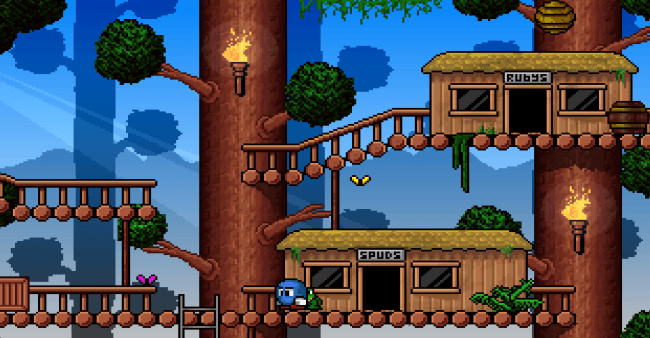
I'll be honest: I kind of freaked out a little when I saw that Spud's Quest was a straight-up homage to Codemasters' iconic adventure game The Fantastic Adventures of Dizzy. There was probably no other video game I played more when I was a kid, and it took my parents and I a solid three years to finally complete the fearless egg's adventure (back when there were no such things as save points or online walkthroughs). I saw the resemblance in Spud's Quest the second I booted up the game, but after actually playing it, I found that our little potato's big quest to help a prince-turned-frog is so much more than a simple homage to an adventure gaming great: it's a fantastically retro adventure that rightfully stands on its own as an essential crash course in inventory-based adventure gaming.Players familiar with the wildly fantastic worlds of Dizzy the egg (and in particular, The Fantastic Adventures of Dizzy) will find that the majority of Spud's Quest plays out like a giant fine-tuned homage to one of gaming's greatest and oft-forgotten adventure heroes of old. Blatant echoes of Dizzy can be found at nearly every turn in the game: from the starting environments like the treehouse village and the rocky mines; to the familiar items you'll find and their overall uses; and even right down to the layout of the land itself, with the lake leading into the town to the left of the starting village. For compulsive Dizzy enthusiasts like myself, it provides a trip down nostalgia lane like very few other games I've ever played."But what's great about Spud's Quest is that for every reference the game gives to its Dizzy inspiration, it does three other things that are refreshingly new and unique to the adventure itself, and some of which I even wish we had seen way back in our prime Dizzy days. On a more basic level, you've got your much-needed save points, Zelda-like health upgrades, and a flurry of achievements and optional collectables to find. On the deeper end of the spectrum, you have engaging new environments like broken windmills and parked stagecoaches, and a slew of more complex features that accent the overall adventuring gameplay in a really wonderful way. Spud's Quest represents what The Fantastic Adventures of Dizzy could have been like had the creators kept the series going well into the 2010s, and added in some timely new features.
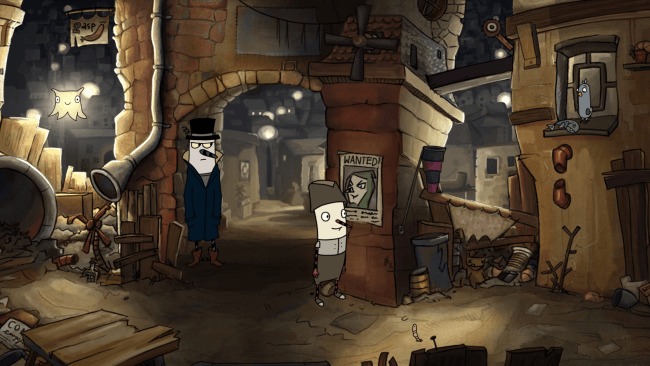
I strongly suspect that The Inner World is going to be one of those games that very cleanly divides adventure fans between those who enjoy its unapologetically old-school sensibilities, and those who find it unnecessarily drawn out and even tedious. It's quirky, cute, sometimes charming, and occasionally even clever, but it's also a paper-thin tale that's utterly, and somewhat tiresomely, dedicated to the warped conventions of "adventure game logic."The Inner World takes place on the inside-out world of Asposia, a hollow "planet" in a universe composed entirely of soil. The air that gives it life comes in through three great "wind fountains," and while the actual origin of the wind is a mystery, one thing is certain: it is slowly dying out. Only one wind fountain remains functional, guarded by the Abbott Conroy and his young assistant Robert. But things go haywire when Robert, a rather simple sort of fellow, befriends a pigeon; the pigeon makes off with the Abbott's most treasured possession and before he can be stopped, Robert takes off in pursuit - his first-ever journey beyond the castle's protective walls."The opening sequence very quickly sets the tone for the game, with simple yet surprisingly emotive hand-drawn graphics and excellent voice acting; and if there's any question as to the gravitas of the narrative, it's answered immediately by the Abbott's baritone command following Robert's surprise departure: "Bring me the hedgehog!" I was smiling throughout the introduction and laughed out loud at that line, but as I dug into the game I found that it wasn't able to maintain that level of sweet (and wonderfully strange) charm.


![All VV Ultimatum Titles [How to Get]](/wp-content/uploads/2026/06/vv-ultimatum-titles.jpg "All VV Ultimatum Titles [How to Get]")