Laura Shigihara is probably best known to gamers as the musician behind "Zombies On Your Lawn," the award-winning (and wickedly infectious) theme song from the mega-hit Plants vs. Zombies. But these days she's hard at work on something of a more personal project: Rakuen, a story-based adventure about a sick little boy living in a hospital. Every day his mother reads to him from his favorite book, about a child in a far-away world who embarks upon a great adventure to be reunited with his tribe. Tired of his hospital life, he asks his mother to take him on the same quest, and so they set off together to discover the Forest Guardian of the story, an adventure that will lead them to learn more about the other patients in the hospital and the secrets and struggles that tie them to it."Rakuen's story actually grew out of a song that I wrote called 'Jump,'" Shigihara recently explained. "I wrote it a few years back but didn't end up arranging/producing it until I was asked to submit a track for the Play for Japan album Akira Yamaoka organized after the Tohoku earthquake. When I wrote the song, I thought about two things: I thought about how in life, we often have to go forward and hope for the best, even though we don't know how things will turn out; we don't know if we'll fly or fall. Sometimes we can't do anything at all but hope for the best, and jump. I also thought about how we all have a child inside of us that just wants to be told that everything is going to be alright. Sometimes when your Mom says, 'Don't worry, everything's gonna be alright,' she can't explain how or why it will be, but just hearing it makes you feel better. That's what this song is about. "That's kind of what Rakuen is about, too. I imagined a little boy living in the hospital, coming to terms with his problems by helping others," she continued. "Perhaps others who are too old to have a Mom, or who are carrying too much on their shoulders to ask someone to be there for them. The boy's Mom gives him the gift of hope, and through his adventures, he's able to pass that on to those around him. Through his actions, he's able to tell them, 'Everything's gonna be alright,' so that they don't have to be afraid to jump."
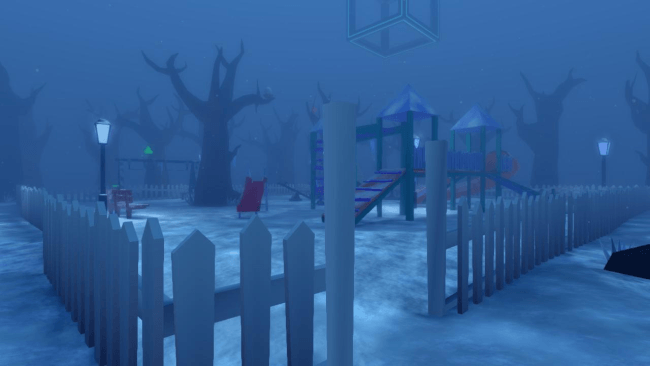
In the not-too-distant future of Master Reboot, death is no longer an end, merely a transition. Thanks to the Soul Cloud, a spiritual software storehouse, owners of Soul Cloud real estate can upload their very being to the database and then spend the rest of eternity re-experiencing memories from the time they were alive. Still-breathing friends and family can visit these memories as well, even sending messages to the deceased-but-not-gone inhabitant of the Cloud via luminous blue rubber ducks.Your experience in the Soul Cloud begins amidst disaster; you awaken unaware of who you are or why you're there, stumbling toward your personal memorial hub as bits of corrupt data flash within the scenery. A mangled voice taunt-whispers from nowhere, "Remember..." while a glowing glyph threatens you with a Hieronymus Bosch-style demonic calling card. What should be an idyllic induction to your eternal rest home has become a haunted, confusing space devoid of answers to the endless questions circling your mind.Master Reboot places you in the shoes and emotions of this unknown soul directly; there's no tutorial, introduction, or hint of what is going on to either player or protagonist. Until you pass through the empty Soul Cloud induction office, you may not even realize where you are. Because of this, from minute one, you're incentivized toward all aspects of this psychological horror puzzle adventure: perturbed by the not-quite-rightness of your surroundings, encouraged to figure out who and why you are, and motivated to explore further to do so.
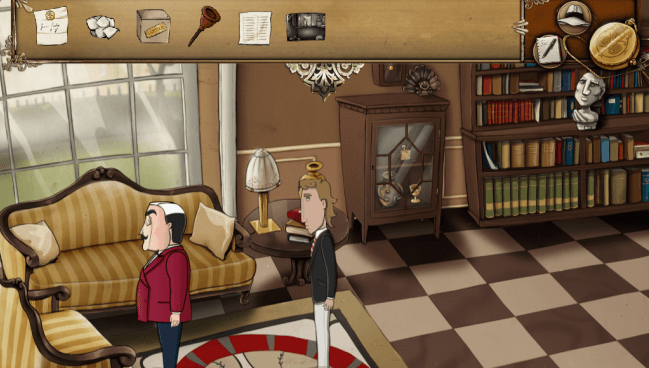
Dream Chamber is a brand new point-and-click adventure game from Microids that's set in 1930s America, and gives players a highly stylized tale of item collecting and dialogue trees. The storyline itself is par for the course with engaging detective novel fare, and features a cartoony, almost-noir sense of presentation and progression. You play as Charlie Chamber, a wealthy-beyond-words man who's taken it upon himself to try his hand at being a private detective, much to the resistance of the actual private detectives in town. But when a highly publicized museum theft occurs at his girlfriend's latest charity event, Charlie will stop at nothing to make sure that he's the one on the case!It's a very nice setup, and the action moves along accordingly at a pretty fair pace, although most of the characters that populate the game world of Dream Chamber are decidedly unlikable, especially Charlie's vapid girlfriend and the creepy dream version of Charlie named Charles. However, the visuals and sound design more than make up for what Charlie and company might be lacking in the personality department. Everything in the game positively pops with bright and colorful illustrations, and a cool wavy visual effect really accentuates the many dream sequences, in addition to some serious top-notch voice-over talent. The actual gameplay is standard point-and-click adventure in every sense of the word; but the big twist here is that Charlie has the uncanny ability to revisit everywhere he's been in his own dreams, to get a deeper or longer look at some all-important evidence!"For instance, in one scene early on in the game, the inspector working the case accidentally drops a list of stolen items onto the floor of his office. Charlie, being the well-mannered gentleman that he is, quickly bends down to pick up the list and promptly gives it back to the impatient inspector, silently wishing he had more time to look over the items on the list in greater detail. When players return to the dream version of this scene a few short moments later, a glowing stolen objects list rests on the floor exactly where the inspector had dropped it in real life, allowing Charlie to scrutinize its contents now in the privacy of his own subconscious mind. It's certainly an interesting mechanic, and one that serves to accentuate all of the amateur private investigating that you'll be doing by day (NOTE: Just be sure to go into the menu and manually save your game at regular intervals, as Dream Chamber disappointingly does not seem to include any sort of auto-save feature).
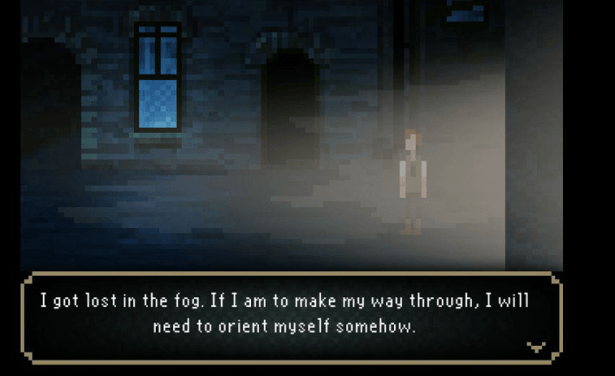
The Last Door: Chapter 3 - The Four Witnesses is the first time that our protagonist, Jeremiah Devitt, is completely without control. In chapters one and two, he deliberately traveled to Beechworth Mansion and his old boarding school, respectively, in an attempt to uncover what drove his friend Anthony to madness and the source of his own nightmares. While Devitt ultimately unearthed more questions than answers, this search was driven by a personal desire for knowledge and clarity. In The Four Witnesses, someone else is pulling the strings.Devitt begins this installment in the same predicament that ended Chapter 2 - Memories: trapped in darkness. Forcing his way to freedom, a dehydrated and weakened Devitt soon learns he's been transported to the slum of Old Nichol in London, a fair trek from the boarding school in Scotland where he lost consciousness. With no sign of his captors and only a mysterious ticket to the play "The Four Witnesses" in his pocket, Devitt must try to find his way out of Old Nichol and back home. Surrounding the slum, though, is a dense fog that can only be navigated with the proper "map." Finding said map, and the strange red-headed man that seems to be leading Devitt around the city, are our two main goals in The Four Witnesses."Despite having these concrete goals to work toward, The Four Witnesses is more vague and mysterious than its preceding chapters. The inclusion of interactive, non-playable characters has returned from chapter 2, providing Devitt a variety of dialogues to initiate and pursue. Many of these characters speak in partial riddles, whether it's the fortune teller who recommends you follow "the path of the bird" or the decrepit composer who directs you to "search the Simurg." These, and other seemingly random comments, are critical to finding your way through the fog, but they come off as nonsensical-yet-poetic ramblings until you have collected all the pieces of the puzzle.
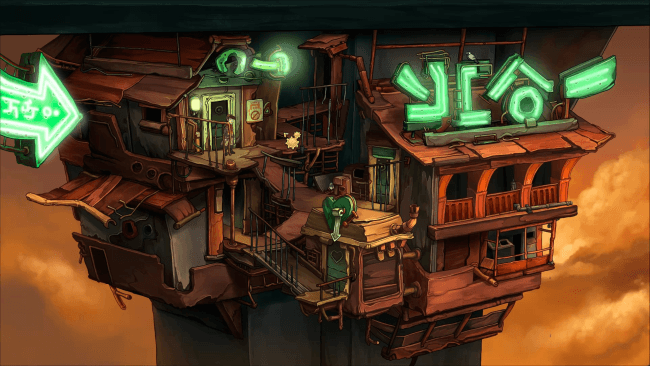
Goodbyes are often some of the hardest things to do in life: especially when it's time to say goodbye to one of the most applauded series of adventure games that we've played in quite some time. Goodbye Deponia picks up right where Chaos on Deponia left off, with our ragtag band of heroes Rufus, Goal, Doc and Bozo on their way to the floating utopia of Elysium to stop Organon and company from destroying Deponia once and for all. The story is full of some nice twists and turns (most of which are on account of something Rufus has said or done), and the sharp and humorous wit of Daedalic's many flawed characters makes for one hell of a conclusion to this fine trilogy of modern point-and-click adventure games.It will probably come as no surprise to those of you who are already familiar with Daedalic's impressive roster of point-and-click adventure games, but Goodbye Deponia positively shines in its presentation. The stylized cartoony visuals are constantly bursting with color and personality, and the different locations you'll adventure to around Deponia and Elysium are a breath of fresh air to the genre. The sound quality is also extremely top-notch as always, with witty musical numbers and some of the best vocal performances I've ever heard in a point-and-click adventure game. The animations are syrupy slick and smooth, and the only real hiccup I found on the technical side of things was in the abruptness of some of the cutscenes, where the screen would quickly cut to black at regular intervals, resulting in some pretty choppy transitions to the overall storytelling."Serving as the perfect complement to the game's visual presentation is the actual writing, which packs in so much of the situational humor and squabbling banter and asides that fans would only expect from Rufus and his crew. In fact, much like the first two games in the Deponia series, the question of whether or not you'll find the game's humor appealing will largely depend on how much you like the half-witted backwards hero Rufus himself. Rufus can definitely be an acquired taste for some, and his sheer stupidity at times and roundabout ways of thinking can be a little much to take at first. But if you've made it this far into the trilogy, then the odds are that you find our hero's helter-skelter methods oddly endearing, and truth be told, Daedalic really allows Rufus to shine here for the majority of Goodbye Deponia.
It's rare to be able to point to a mobile game and say, "This title fits this platform as snugly as a wax cylinder fits a phonograph," but that's where we are with Simogo's Device 6. This interactive novel works beautifully with the touchscreen rather than in spite of it. More importantly, it delivers a remarkably unique and engaging experience that carries on Year Walk's spirit, but is considerably more polished than its predecessor.Device 6 gradually tells the story of Anna, a girl who wakes up alone in an opulent, seemingly abandoned setting. There are two things on her mind: escape, and figuring out where the heck she is. All she's carrying is a massive headache and a vague memory of a creepy doll.Device 6 is told across six chapters, which double as interactive escape situations. Reading through these chapters isn't as straightforward as beginning at "Once Upon a Time" and concluding at "The End," however. The narrative twists and turns - figuratively and literally. When Anna turns right down a corridor, the on-screen text may take a sharp right, forcing you to turn your device accordingly. If she descends down a staircase, the text does as well. It's easy to get lost in Device 6's words during these moments (again, literally), which can be frustrating - until you begin to notice that there are arrows beside the text that quietly herd you in the correct direction.
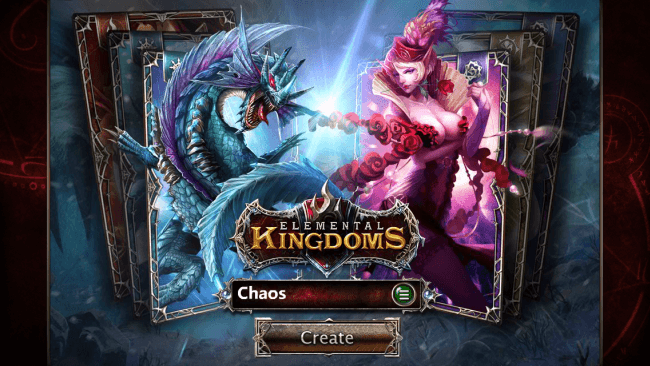
Elemental Kingdoms is an online collectible card game created by iFree Studio and Perfect World Entertainment. It's a vaguely story-based game with plenty of cards to gather and strategies to employ. Gamezebo's quick start strategy guide will provide you with detailed images, tips, information, and hints on how to play your best game."
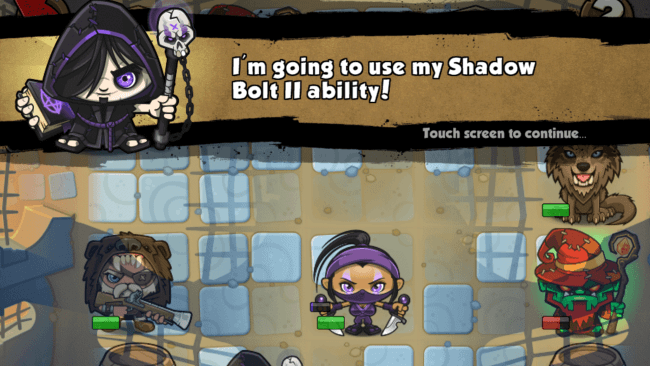
Known for convoluted skill trees, multiple-layer menus, and complex gear load-outs, role-playing games can be daunting to the casual gamer. With Pocket Titans, new indie developer Noisy Orc Games removes much of what generally bars the way for players unfamiliar with RPG mechanics. What's left is a fast-paced, streamlined fantasy role-player that, though repetitive and largely automated, is a fine introduction to one of the game industry's most venerable genres.Briefly, Pocket Titans' narrative involves a group of young apprentices attending the Titans Academy where they hope to become full-fledged heroes. The gameis built upon a foundation of fantasy archetypes, but rather than coming up with thinly-veiled terms for them, Noisy Orc presents them as literally as possible. For instance, characters announce themselves not with bombastic titles like "Tim, the Nefarious and Deadly Enchanter," or "Rothelm, the One-Eyed Orc-Beater," but simply as "Mage" and "Warrior" (or Healer, Ranger, Paladin, Hunter, Warlock, and Rogue)."These practical-minded mercenaries sign up to help their king defeat an evil Orc horde, and as such, must fight their way through swamps, skeleton-filled passes, and forests until facing down the Orc King in his castle. In a typical role-playing game, this process would be fairly elaborate. Before battle you'd choose your party members, equip them with the best weapons and armor possible, set them to perform certain actions by assigning their skill points, and maybe even spend time crafting healing potions and other useful items. Some gamers love this kind of micro-management, but for others, it's an unnecessary delay that prevents them from jumping into the action.


![All VV Ultimatum Titles [How to Get]](/wp-content/uploads/2026/06/vv-ultimatum-titles.jpg "All VV Ultimatum Titles [How to Get]")