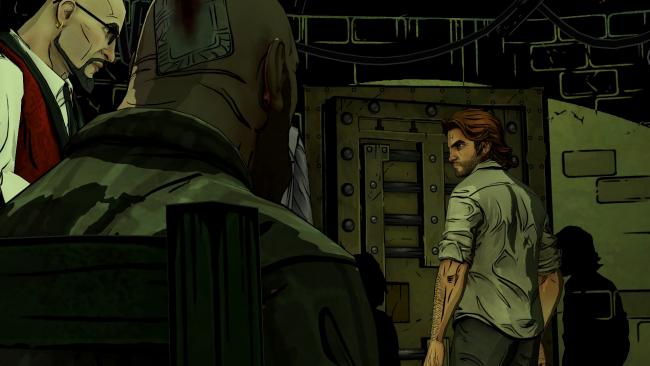
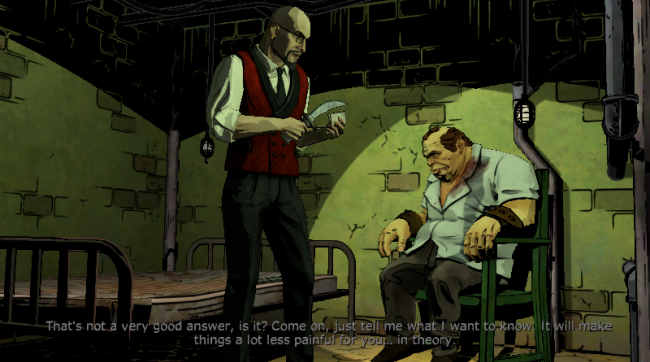
Don't you hate when a TV series ends its season (or mid-season) on a cliffhanger? It keeps you on the edge of your seat for months, and you just want to throw your remote through the TV. Telltale Games creates a similar fury in me with every single game they release. And The Wolf Among Us is no different.Finally available after a bit of a delay (and nearly four months after Episode 1: Faith), Episode 2: Smoke and Mirrors continues the story of Bigby Wolf, sheriff of Fabletown, as he investigates a pair of beheadings that have occurred in the Fable community.What's a Fable? If you have to ask that, we suggest you stop reading this review now and go play Episode 1 (or even better, go read Bill Willingham's award-winning comic Fables that provides The Wolf Among Us its setting). Here's the short version for those not interested in taking our advice: due to some unseemly shenanigans, the characters that populate fairy tales had to escape their world to live in ours. They live normal lives masquerading as humans, but mostly try to keep to their own kind, aka Fables.
The Wolf Among Us: Episode 2 - Smoke and Mirrors is a point-and-click adventure game created by Telltale Games. In this game, you take on the role of Bigby Wolf, a tough law enforcer who tries to keep the peace among New York's fantastic population of "Fables." Episode 2 carries on with the cliffhanger that capped off the end of Episode 1. Gamezebo's walkthrough will provide you with detailed images, tips, information, and hints on how to play your best game."
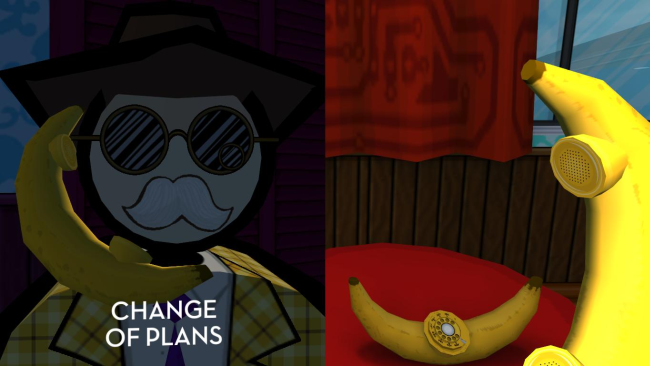
Jazzpunk is different. When its mother says it's a special and unique snowflake, that the other games only make fun of it because they have gout, that deformed ducklings are actually beautiful pigeons, she's right. If we had to categorize Jazzpunk in a "normal" genre so it can go to regular school instead of one with crocodile grades, it would be a first-person adventure. But that's just a disguise. Jazzpunk doesn't fit neatly into any classification, except something like "joke sandbox," of which it is the pioneering and only one of its kind. "And yet, it is still very much a game. It looks like a game, it feels like a game, and it rewards its players like a game. In fact, it's actually a lot of games: a yard sale assortment of almost-recognizable titles with strangers' names scrawled across them in black Sharpie, dropped in a one-price-for-all box someone decided to round out with whoopee cushions and books of Russian brain teasers. This box is familiar and foreign, and while you can't possibly appreciate everything that's inside, you take it home and sort through the spoils, giggling at nostalgic discoveries of sticky hands and foam dinosaur pills.So what's actually in the box labeled "Jazzpunk"? There's a 1950s spy motif, splashed across an alternate Cold War era reality where technology has evolved to the point of robot butlers but not past the point of banana phones. This world is painted by a colorful, cartoonish brush that elicits memories of everything from Team Fortress 2 to Viewtiful Joe. The characters that populate this 3D-but-at-times-2D land fit the strange anti-dimensionality well, as armless creatures that acknowledge they—or at least you, the player—look like bathroom symbols.
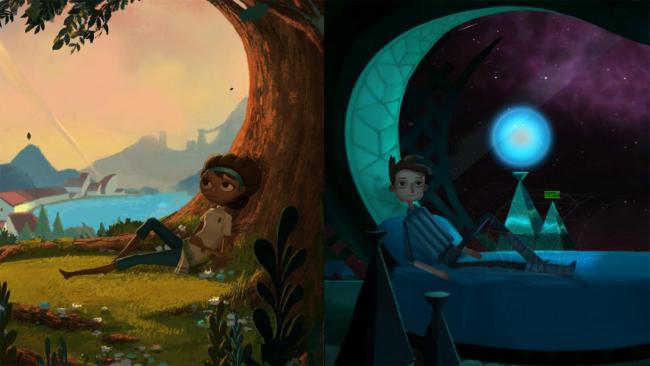
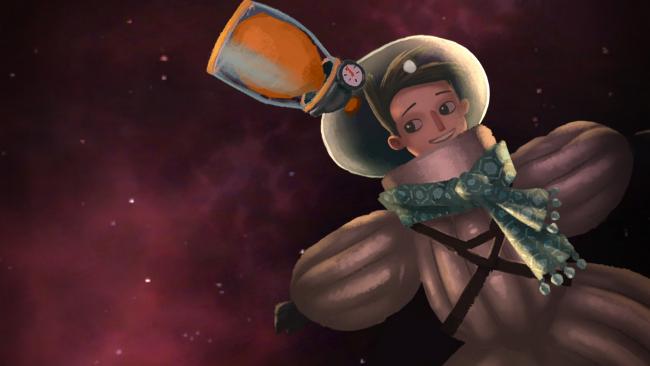
Broken Age: Act 1 is a point-and-click adventure game developed by Double Fine. In this game, you take on the role of a young, sacrificed woman named Vella and a space station-bound boy named Shay as they face their individual fates in separate, yet somehow connected lives. Gamezebo's walkthrough will provide you with detailed images, tips, information, and hints on how to play your best game."
I've seen some reviewers refer to In Fear I Trust as a survival horror game. I've also seen the App Store's description describe it as "polished, compelling, and instantly unsettling."It is none of these things.The game does nothing to dispel the rumors of its horrific nature, but I can assure you that this is a visual novel at heart. Personally, I like visual novels quite a lot (Zero Escape: Virtue's Last Reward has one of my favorite video game stories of all time and Device 6 proved that the genre has a place on iOS)."Perhaps Chillingo and Turn Me Up Games didn't think a Western audience would be receptive to a game marketed as such, because the app's page is quick to point out the "danger" and "creepy jump scares" found in the game. Unless you count the danger of encountering one of several dozen bugs and glitches in the game's decidedly unpolished first two chapters (the game is episodic and, at the time of this review, only the first two chapters are available) you're in no threat of dying - ever.Rather, the game is presented as a series of locked rooms and the illogical puzzles needed to open them. Occasionally, you'll encounter a tape recorder or journal to fill out the story or trigger a flashback cutscene. That's pretty much the whole game, and if the puzzles weren't so poorly designed, the story so disjointed and confusingly written, and just about everything else riddled with technical issues, that would be enough.
In Fear I Trust is a first-person puzzle adventure game from Chillingo in which you must explore and solve puzzles to progress through a horrific environment. Gamezebo's walkthrough will provide you with detailed images, tips, information, and hints on how to play your best game."
For years, people have been insistent on saying that the point-and-click graphic adventure is a dead genre. And to that, I say "bullcrap." It doesn't have the mainstream appeal that it once had, sure - but thanks to the likes of companies like Wadjet Eye Games, Daedalic Entertainment, Telltale and more, the selection of great point-and-click adventure games has been bigger than ever in recent years.The problem, though, is that there was one person we all really wanted to see make adventure games, and he just wasn't doing it. That person co-wrote the first two Monkey Island games, gave us Day of the Tentacle, Full Throttle and Grim Fandango, and walked away from the genre completely once public interest died off. That man was Tim Schafer.And now that man is back.
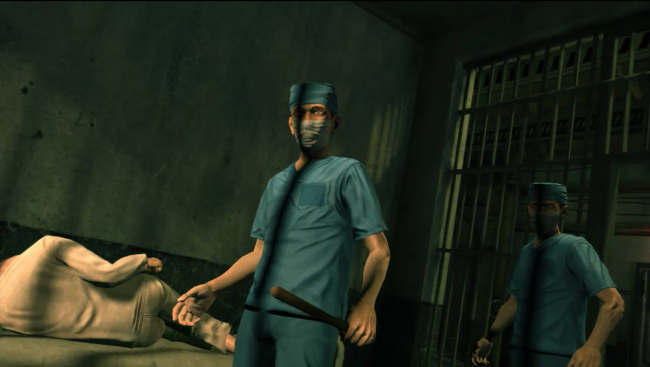
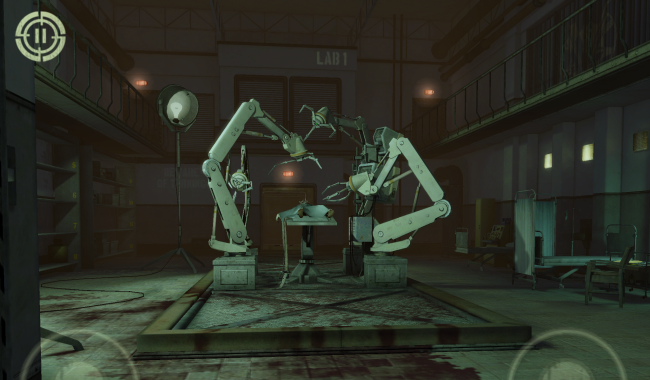
Surprise, surprise—a licensed mobile game conveniently released to coincide with the near-future opening of the film on which it's based has proven to be subpar. Such is RoboCop from Glu Games. You are Alex Murphy, a good cop and even better lover who was terribly injured and then six-million-dollar-man'd into a futuristic cyborg cop ready to police a world in which robot violence has become commonplace. And though it would probably be sweet if the city of Detroit just let you out on your own to, y'know, slay criminals, you're going to have to train via a series of incredibly lifelike simulations to hone your coppin' and killin' skills before you do any of that.For a film series that is, for all intents and purposes, over the top and god-awful, RoboCop is oddly beloved. As such, most of the buzz we've heard about the upcoming reboot has been negative and/or bewildered, but despite this and the obvious B-movie air with which the films carry themselves, trailers for the upcoming action flick look pretty damn cool. Sadly, this level of high-quality action set-pieces meets bazonkers plot doesn't translate so well into a game so clearly rushed to release in order to capitalize on the possible success of the film.Admittedly, the gritty, urban environments found within RoboCop are not bad. Certainly there are more beautiful games to behold, but for its stand-and-shoot mechanics, the look and feel of each area serves its purpose well. These are some of the better lighting effects and detailed character models to be found within the App Store's 3D shooter stable, and it is undeniably satisfying to line up and execute a headshot on some bespectacled (seriously, a lot of these dudes have glasses) enemies. RoboCop himself looks pretty detailed, but what kind of world are we living in when the hero of a game seems to have had more development attention than gameplay? I guess that this is actually not all that uncommon, but still…it's weird.


![All VV Ultimatum Titles [How to Get]](/wp-content/uploads/2026/06/vv-ultimatum-titles.jpg "All VV Ultimatum Titles [How to Get]")