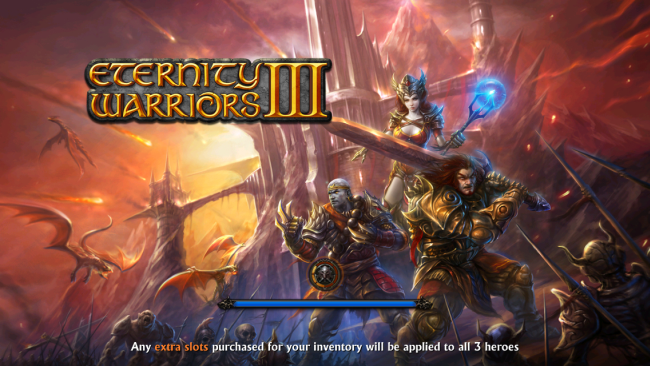
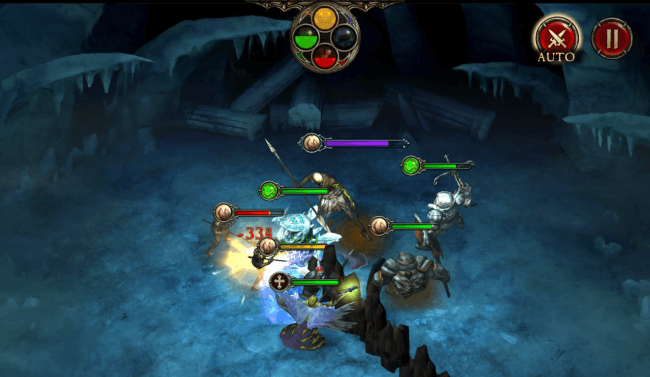
Eternity Warriors 3 is an action game from Glu Games, wherein you can play as one of three heroes, battling it out in your quest to unseal the Eternity Sword and take on the Lord of Hell. You can become the next great warrior by mastering the game's combat system, and Gamezebo's quick start guide will give you all of the tips, tricks, and walkthroughs you'll need to accomplish that goal."
The thing about most endless runners is that, by virtue of their very name, they tend to be endless. This can be a bit of a problem at times, particularly when there's a narrative by which the inevitable mark of failure can yield some rather grim implications. Oasis: Path to Redemption is not like that, however; a fact it proudly boasts as it promises a defined ending. That said, just because it has an ending (and five worlds to traverse in order to get there) doesn't mean that it is by any means easy.Oasis also favors itself as an RPG ("Action RPG Runner" in full), though this isn't really much the case; as you run along and take down one foe after another, you'll gain experience which you can use to acquire new skills, thus allowing you to progress even further… at least, in theory. Of course, so many games allow for experience and leveling up that those traits are hardly unique to RPGs any more, but that's getting off on another tangent."The idea behind Oasis is sound: Like most runners, the key to victory is in memorization, and by leveling up your skill set, you'll be able to progress even further with each new try until you ultimately reach the end (at which time you'll unlock a Mission Mode). Unfortunately, while the idea is sound, the execution is lacking in some areas.
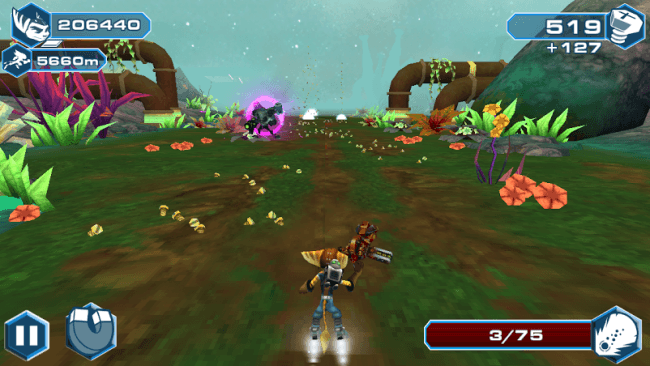
Ratchet and Clank: Before the Nexus is an endless running game created by Sony Computer Entertainment. Ratchet and Clank: Before the Nexus challenges players to run as far as possible while collecting items, dodging attacks, and wasting enemies with gun-style weapons. Gamezebo's quick start strategy guide will provide you with detailed images, tips, information, and hints on how to run like the wind."
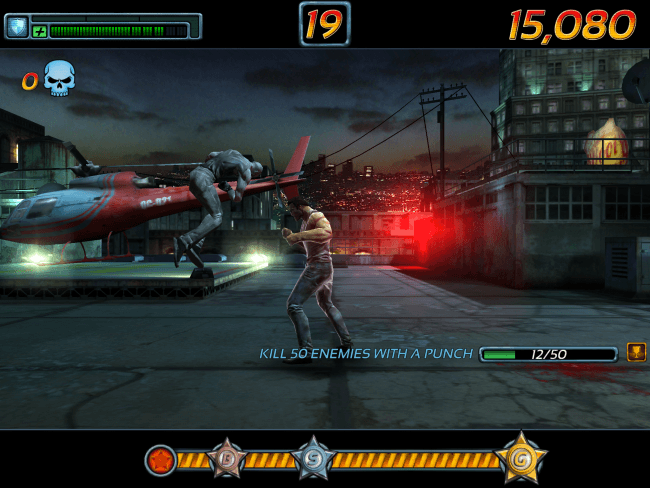
Developer Ninja Theory has a short but sweet track record of quality console games, the last being January's DmC: Devil May Cry. So when asked to check out their newest title, Fightback on iOS, I was intrigued. This is the company's first venture into the world of mobile games, but I was confident that the company's prior success would be able to make the transition into the mobile market. Then, I looked at the game and I started to get nervous.It's easy to take one look at Fightback and start to judge it. It's a two-dimensional beat'em up with a protagonist that looks like a dark-haired Duke Nukem and plenty of dark and unimaginative stages. There's little about the presentation that's worth applauding, but I'd like to think that Ninja Theory realized this after jumping into development. Even though the presentation is often laughable, it gets to the point where it starts to feel like a cheesy "B" movie. I found myself chuckling at the giant muscle man storming into a room, beating people, and checking behind him before leaving.Unlike movies, cheese means nothing if gameplay doesn't back it up. Fortunately, Fightback's play is often as solid as the protagonist's abs. Right away, I started to pick up on some Mortal Kombat (2009) vibes. Those who played that reboot are likely to pick up on some of the similarities. While there's no super-exaggerated uppercut or gratuitous gore, you'll be able to punch, kick, and juggle enemies in the air until they're finished.
Ratchet and Clank is a popular action game property that's exclusive to Sony and the PlayStation, so it's only natural to do a double-take at Ratchet and Clank: Before the Nexus for mobile.Before the Nexus isn't actually a full-fledged Ratchet and Clanktitle, however, nor does it contain the depth of any of the series' mainstream entries. In fact, Before the Nexus is a 3D endless running game that plays much like any other runner slumming around on the App Store or Google Play. It looks great and it should keep you busy for an hour or two, but the game obviously exists just to whet your appetite for the latest Ratchet and Clank title, Into the Nexus for the PlayStation 3.As its name implies, Before the Nexus takes place before the events that unfurl in Into the Nexus. Vendra Prog and her brother, Neftin Prog, are making trouble. And, like most villains in endless running games, they're making a beeline for the horizon. Ratchet gears up to stop them. Luckily, Lombaxes are fleet of foot.
I was disappointed to discover that in spite of all the pre-release promotion, The Gate has about as much to do with real-time strategy as Family Feud, and is in fact a straight-up collectible card battle game. But as I delved into it, I was also elated to learn that it's a really, really good CCG, quite possibly the best one I've played since I broke free of my Rage of Bahamut-habit."Combines Real Time Strategy and Training mechanics," the App Store entry for The Gate promises, and for a brief while I bought into it. Passing through the Gate into a hellish underworld filled with demons and wickedness, your only hope is to fight - and by fighting, your hope is sustained. As you move ever deeper into this sulphuric underworld, you'll acquire "Disciples" who you can train, upgrade, and evolve, and who will do battle on your behalf against both computer-controlled opponents and the forces of your fellow players. This is where the RTS component comes into play, as instead of simply a static, numbers-versus-numbers contest, battles are rendered entirely in 3D and filled with impressive visual effects."You move your characters by tapping and then dragging to where you want them to go, and unleash their skills in battle by tapping on icons at the top of the screen. To heal them, simply tap your healer - everybody has one - and then drag to the character in need. It's simple and reasonably intuitive, although the lack of a zoom control makes it difficult to select a Disciple in the heat of a crowded battle.But it's also almost entirely unnecessary thanks to the "auto" function that will control the demons in your army with a good degree of competence. It may not be quite as effective as handling the situation personally, especially at higher levels, but the "fire and forget" convenience is handy; and if you don't like how things are going, you can turn it off and assume direct control of the action at any time.
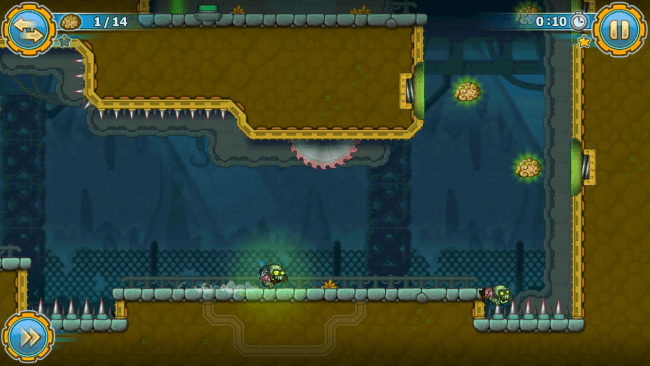
In the upcoming Deadlings from Artifex Mundi, the Grim Reaper has decided to make nice with the living world once and for all. After all, he's always getting such a bad rep from humans, but it's not his fault that people sometimes die! So to make it up to them, the Reaper drafts a genius plan to raise the dead and get them on their way. The result, of course, is hoards and hoards of brain-loving zombies.I recently had some time to go hands-on with an early build of the game, and believe it or not, Deadlings actually plays out like an awesome cross between tough-as-nails platformer Super Meat Boy, and a more strategic zombie affair like Plants vs. Zombies. At the start of each level, you'll be presented with a digital overview of the level layout, where you can scope out the location of each brain collectable and plan your most efficient path. Once you have your bearings all set, you tap on the starting point and choose which type of zombie you'd like to unleash, and which direction you'd like them to start running in."At this point the game switches over to its Super Meat Boy inspiration, with your selected zombie automatically running forward in the direction you've chosen, and your new task being to make them jump over spikes and other obstacles by quickly tapping on the screen. If you mess up the timing, your zombie will splatter against the environment and remain a bloody mess there until you either finish the level or use a special power-up to resurrect him. But not to worry though! Each level will give you a fixed number of the undead to go through, so you have a little breathing room on your endless quest for brains.
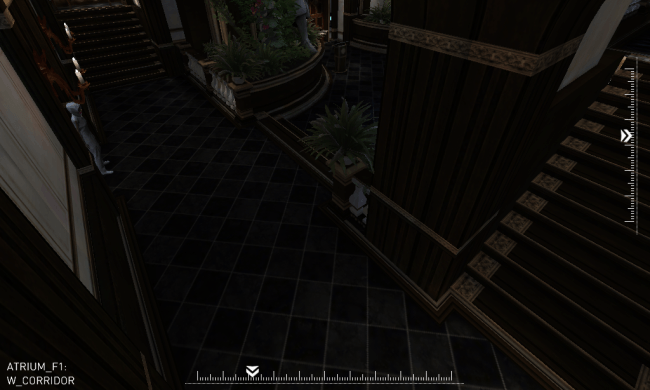
It's a surveillance society, and we're all just living in it. At my day job, I have to admit that I happily contribute to it. Other times I do wonder about the implications of it all, and the folks at Camouflaj obviously do too. Their sci-fi stealth survival game République explores the positive and negative aspects of omnipresent cameras and a connected civilization, and does it with a storytelling flair few mobile games have managed to date.If setting the mood of a video game was a college course, République Episode 1: Exordium would be the professor. You meet the game's protagonist, a girl named Hope, when she calls you for help. She may or may not have read something she shouldn't have, which is against the rules in the (apparently near future) city of Metamorphosis. The Orwellian buzzwords fly during the opening scene of dialogue - Recalibration, The Arrival, etc. - but it's clear Hope is in trouble, and only you can help."The reason you can help is both a plot device and a nifty gameplay mechanic. It turns out you are hacked into the surveillance system of this particular totalitarian nightmare through Hope's cell phone. You can hop from camera to camera to see where Hope can't, looking ahead to help her evade her captors.And that's just the tip of the iceberg. Using the special OMNI software, you can not only see how the cameras are linked together, but you can also pull off useful tricks like unlocking doors, seeing through walls to find the guards, and finding items like pepper spray. You'll also find pieces of propaganda that fill in the game's world and work as currency you can trade for additional abilities, like scanning the guards' email and causing distractions.


![Hololive Dreams Tier List [Best Cards]](/wp-content/uploads/2026/07/hololive-dreams-tier-list.jpg "Hololive Dreams Tier List [Best Cards]")


![Iron Soul Dungeon Weapon Tier List [Best Weapons]](/wp-content/uploads/2026/07/iron-soul-dungeon-weapon-tier-list.jpg "Iron Soul Dungeon Weapon Tier List [Best Weapons]")