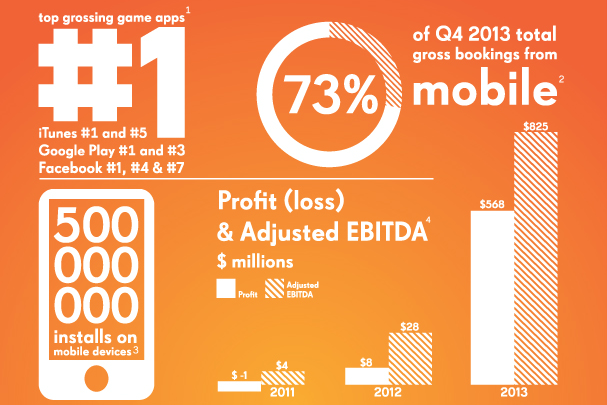
The United States leads the way when it comes to the consumption of digital content, a glimpse of the future can be had by looking at the East, and games, especially mobile games, are the current kings of digital media.Those are just a few of the insights to be gained from a new joint study from App Annie and global research firm IHS, the first to be produced by the combined efforts of both organizations. The report takes a detailed look at trends across all kinds of digital content — including digital games, game apps, other kinds of mobile apps, movie and music streaming — and also identifies how the markets in different countries differ.Probably to no one's surprise, digital games led the way globally in 2013. Consumer spending on games rose to $34 billion last year, accounting for more revenue than online movies and mobile apps combined.That number includes all types of games with digital distribution, such as online PC and browser-based titles, digital downloads on consoles and mobile game apps. But it's the last of those subcategories that has been driving the overall growth. In seven key markets (the U.S., U.K., Germany, France, Russia, Japan and South Korea), spending on mobile games distributed through the iOS App Store or Google Play rose 2.9 times between 2012 and 2013, whereas spending on the entire digital games category in those same nations was up only slightly year-over-year.
While a lot of individual developers have voiced concerns about King's trademark filings (as first reported by Gamezebo back in January), there hasn't been an official, collective show of opposition to what's transpired - at least not until right now.The International Game Developer's Association has just released the following statement from Executive Director Kate Edwards and their Board of Directors, regarding their stance on King's actions around protecting their IP with trademark law;
It's funny how a little time and some outside influence can really help sway your opinion. When I first played Broken Age last month and met the train conductor, I turned to my wife and shouted "LOOK! IT'S THE TICKET TO RIDE GUY!!" I was promptly told that "all train conductors look like that," put my tail between my legs, and went back to saving the yarnpals on that runaway train.Now, a few weeks later, former Gamezebo contributor Dan Zuccarelli has noticed the same thing.Dan has stitched together a pretty handy comparison image that proves my original inclination right: that's totally the same guy. Every little detail is exact, from the bag to button count to the details on his hat. The only difference is that his positioning is mirrored from his original appearance in Ticket to Ride.Blatant rip-off, or loving homage/easter egg? I'm inclined to go with the latter. Besides, I'm still wondering why everybody in the game has Muppet noses.
Back in September, King was rumored to have taken the first steps towards offering an IPO when by filing an S-1 Form with the SEC (which, it turns out, wasn't true). Today they're taking one of the last. The company announced this morning in a press release that they have "filed a Form F-1 with the United States Securities and Exchange Commission relating to a proposed initial public offering of ordinary shares."This doesn't mean those share are for sale quite yet - or that we even know how many of them there will be or their initial price - but we're closer to finding out. The F-1 provides investors with all of the information they might need before making a decision regarding King stock. You can read the whole thing here.Once the IPO is live, King plans to trade on the New York Stock Exchange under the ticker symbol "KING," and a whole bevvy of business names will be acting as joint book-running managers: J.P. Morgan Securities LLC, Credit Suisse Securities (USA) LLC, MofA Merrill Lynch, Barclays Capital Inc., Deitsche Bank Securities Inc., and RBC Captial Markets, LLC. The first three of these will act as representatives of the underwriters in addition to book-running managers.How the stock will perform once it is live, though, is anybody's guess. Some might be quick to point to the rise and fall of Zynga (ZNGA) as a cautionary tale for investors, but despite their similar nature in some respects (both are providers of free-to-play games, and both were #1 in that market at the time of their filing), the two are incredibly different companies.
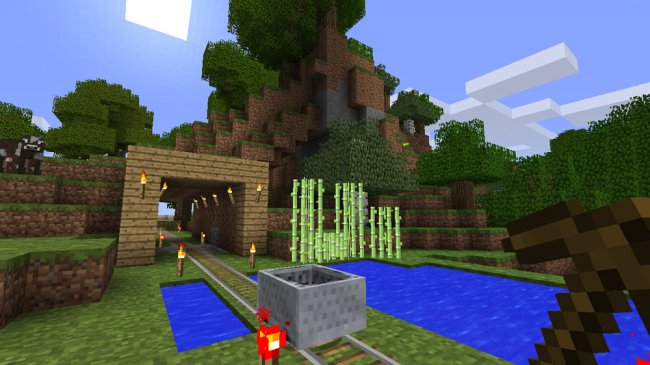
There are very few other games today that have managed to achieve "cult phenomenon" status as Mojang's Minecraft. The game's been sitting at the very top of the iTunes App Store "Paid Games" chart for as long as I can remember, and gamers have spent hundreds of hours crafting their own unique and blocky sandbox worlds. But despite the game's essential endless nature, sometimes you might be in the mood for some different kinds of crafting or sandbox adventuring.So we decided to compile a list of some other great games that are sure to make the Minecraft fan in all of us feel right at home. Maybe these games might change up that first-person crafting perspective, or maybe they might let you build some blocks on the moon. Either way, they're all decidedly Minecraft, but more importantly, they're all decidedly fun."The total amount of games like Minecraft today is positively staggering, and if I actually tried to write down every single one, then this list would quickly become as endless and infinite as your favorite sandbox-crafting games themselves! So if there are any other particularly good Minecraft-like experiences that we might have left out, be sure to point out your favorites in the comments section below!
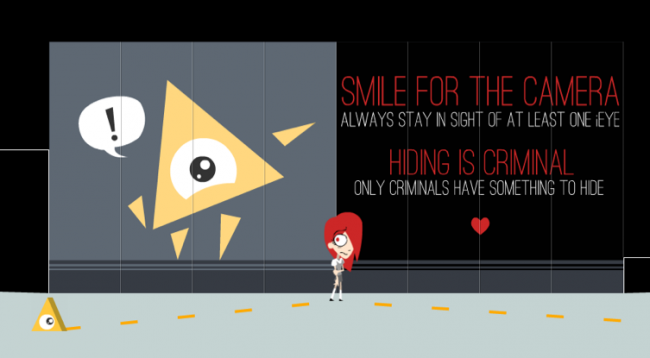
Copyright is failing Nicky Liow. The developer got his start rearranging code in open source games passed around for free online. He's a self-taught programmer that learned by doing, and did so with the help of the free spread of ideas and information.Now he's giving something back. Nothing to Hide is his upcoming puzzle game -- an "anti-stealth" game where the goal is to constantly be seen. It's a blunt statement on the nature of surveillance culture and it's completely without copyright. The art, the code and the music are entirely in the public domain, even as the game is being developed.The game's funding, too, is open to the public. Nothing to Hide is offered through Liow's own site in a way that keeps him accountable. He only takes 25% of a pledge for each milestone (once at the start, and again when the game hits alpha, beta, and final release). Anyone unhappy with the state of the game can withdraw their remaining funds at any time.I spoke with Liow to discover why he sought to create an entirely "public" game. His inspiration, it seems, comes from the same place as his skill as a programmer.
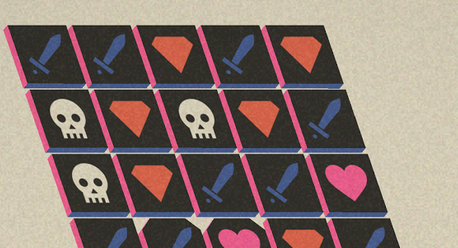
FAIF is a quick-and-easy game of chance where players select five adjacent tiles on a game board, and attempt to defeat their opponent. The trick to the game is that while five tiles are selected, the game decides which of the five tiles is triggered.Each tile-type triggers something different. There are four tile types: heart, sword, gem, and skull. If a heart tile is chosen as the winner, the player receives one extra health point. Landing on a skull instantly removes one health point. Winning a gem tile awards the player gems in the amount of how many were selected in the group of five. If a sword tile is the winning tile, damage is done to the opponent equal to the amount of skulls in the group of five. So basically you cannot damage the opponent without taking a risk of being hit yourself.
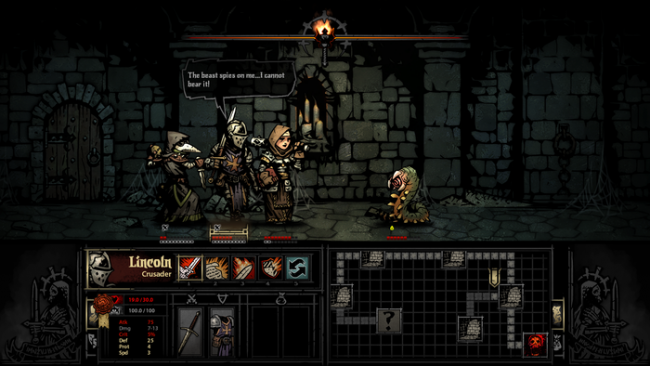
As the new generation of video game consoles is absorbed into households all around the world, millions of people are getting their first glimpse at the next generation of video games. Unquestionably, the majority of these gamers will gleefully murmur "it's so realistic" as they hack their way through Ryse, or blast their way to the frontlines in Killzone. Realism is what many developers aim for, and the easiest way to appear realistic is to simply look realistic.Realistic graphics go a long way towards helping to immerse the player into the game's story. However, that realism stops as soon as the battles begin. While some lucky few may make it through a battle, or even a war, unscathed, no one escapes the mental damage that being exposed to such carnage causes. Few games have ever stopped to take into consideration the psychological toll of battle on a character, let alone allow the player experience those side effects as part of the game.The game developers at Red Hook Studios have been itching to explore how players will handle heroes who are liable to suffer from the mental side effects of battle, in their upcoming game, Darkest Dungeon.


![All VV Ultimatum Titles [How to Get]](/wp-content/uploads/2026/06/vv-ultimatum-titles.jpg "All VV Ultimatum Titles [How to Get]")