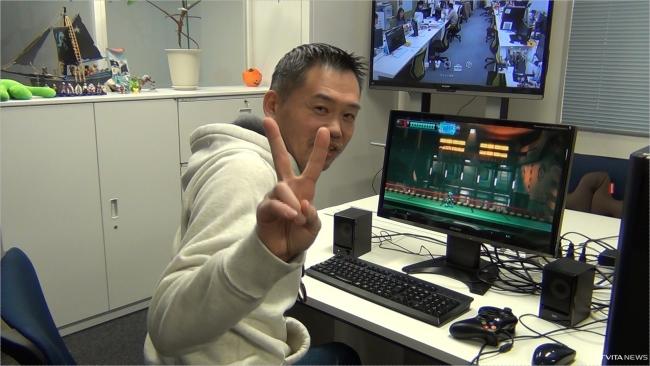
If anyone remembers the heyday of Japanese gaming's global domination, it's Keiji Inafune. The man responsible for Mega Man, Dead Rising and Onimusha has been a champion in the marketplace since the NES days. He recently left Capcom to form his own indie games studio, Comcept, and his first creator-owned project, Mighty No. 9.It's a pretty familiar story; we've seen plenty of notable developers go this route in the West. But in Japan, Inafune is an anomaly.And that might just be what's wrong with Japanese gaming.At a GDC panel last week dubbed "Meanwhile, in Japan," Inafune was joined on stage by Mark MacDonald of Japanese localization company 8-4. The two explored the cultural differences that have limited Japan's growth in the West, including their indie scene.
Let's face facts: nobody likes King's attempts to trademark the word CANDY. When the story first broke back in January, it was a public relations nightmare for King. In an attempt to protect their Candy Crush Saga IP, they obtained the trademark for the word CANDY in the EU, and were trying to do the same in the US.The games community - and indie developers, in particular - were quite vocal in their opposition to King's tomfoolery. But few have managed to take any sort of meaningful action, and those who've tried have been shut down in the most unseemly of ways. Just ask Albert Ransom.It took a body as big as the IGDA to seemingly pressure King to withdraw its trademark application on the word CANDY in the US.But what about outside of the US? To really make an impact in the EU, it was going to require a company that could bring out the big guns. Somebody with a game that's attained the same kind of household name recognition as King's Candy Crush Saga has. Someone like ZeptoLab, creators of Cut the Rope.On March 20th, ZeptoLab filed a claim in London that, if successful, will see King's EU trademark registration on the word CANDY cancelled.
Cultural phenomenon? Absolutely. But that doesn't mean it's complex. Flappy Bird is endearing because of its simplicity. And in keeping the game simple, it remains easily adaptable. Take Flappy Bird in a Box for instance - a real-world rendering of the game that's now available as a DIY kit on Kickstarter.Created by Fawn Qiu, a Harvard alumni who co-developed teacher curriculum for the kids-can-code program Scratch, Flappy Box is just the latest in her "anyone can make anything" approach to STEM culture. Qiu is also the founder of MakeAnything - a technology kit community that promotes STEM learning through accessible, user-friendly project kits and workshops.Qiu's Flappy Bird project really took flight after an appearance on BuzzFeed in February. But while cool, it was also pricey to build. "The motors and Arduino board alone would cost $70!," reads the project's Kickstarter page. But with so much interest, Qiu knew there had to be a way to bring the cost down. Her team has sourced raw materials and streamlined the design to help bring the price to a consumer-friendly level. Also, ordering in bulk helps. "We want to raise money in order to put in a large order and to make the Flappy Box Kit more affordable."
Every few weeks Valve will release a new list of games which have been approved through Steam Greenlight, their system for allowing the public to vote on which games achieve publishing deals with Valve. While the votes themselves are not the exclusive deciding factor, they certainly help Valve target which games to allow onto their platform. The lists of approved games often reflect the most popular titles which have attained large amounts of industry attention due to an exciting innovation or by sheer luck. However, not every game on Steam Greenlight gets approved and put on one of Valve's lists.After spending some time digging through the most recent games posted to Greenlight, I'd like to show you five of the weirdest games I came across.
Late last October, Toco Games' endless runner, Last Knight, was approved for distribution on Steam. Now, five months later, Last Knight is about to make its Steam debut with some brand new content. The Steam release, entitled, Last Knight: Rogue Rider Edition, is set to feature the new Rogue Rider gameplay mode which combines rogue-like elements along with Last Knight's signature gameplay mode."The game mode lets the player make his own way through a randomly generated kingdom full of dangers and riches," David Hagemann explained to Gamezebo. "Like the name implies, it is heavily inspired by rogue-like games... Its intention is to combine elements that you might know from these games with the elements of Last Knight, the result is something even more intense than most rogue-likes since there is no health at all and perma-death is always just a split second away."
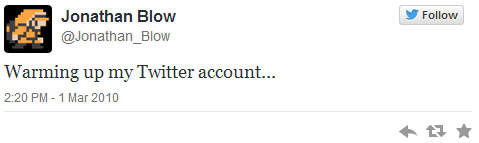
Every now and then, the internet gets a funky little oddity that provides a surprising amount of amusement for what it is. Today, Twitter rolled out once such oddity. By visiting discover.twitter.com/first-tweet, you can see the very first tweet you posted to your account.In fact, you can see anyone's first tweet. (tee-hee)And so, like any good citizen of the internet, I felt it was my responsibility to comb through the first tweets of every game developer worth following on Twitter to find the ones that really stuck out. As you'd expect, 99% of them are people saying "I'm on Twitter now" or "let's see what this Twitter thing is about." In an effort to represent the 99% (Occupy Twitter, people!), here's what Jonathan Blow, the creator of Braid and the upcoming The Witness first tweeted: "Now that we have that out of the way, let's see what those who weren't ready to just greet their newfound Twitter friends had to say.
Games today are cheaper and more plentiful than they've ever been. That's great news for players, but finding the time to actually complete something -- to find that sense of finality -- can be a challenge.Luckily, the independent game scene is often less interested in 20-hour campaigns and repetitive score-chasing. There are plenty of great games out there offering a complete experience in the time it takes to install most big-budget action titles.These are five such games.
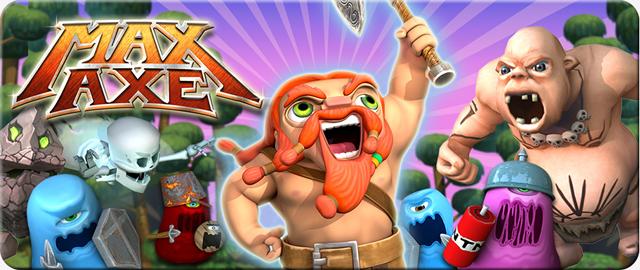
After making a big splash earlier this year as Apple's Free Game of the Week, Max Axe's creators have entered into a partnership to bring the game to one of the world's biggest mobile markets: China. Details on that, funding announcements, and what happens when your games violate Chinese regulations below!Thanks as always to our partners at the Beijing-based Laohu.com for sharing this weekly roundup. For a deeper understanding of the Chinese mobile games market, be sure to bookmark Laohu.com.


![All VV Ultimatum Titles [How to Get]](/wp-content/uploads/2026/06/vv-ultimatum-titles.jpg "All VV Ultimatum Titles [How to Get]")