


Best Horror Games On Itch.io – July 2026
Across a bounty of subgenres.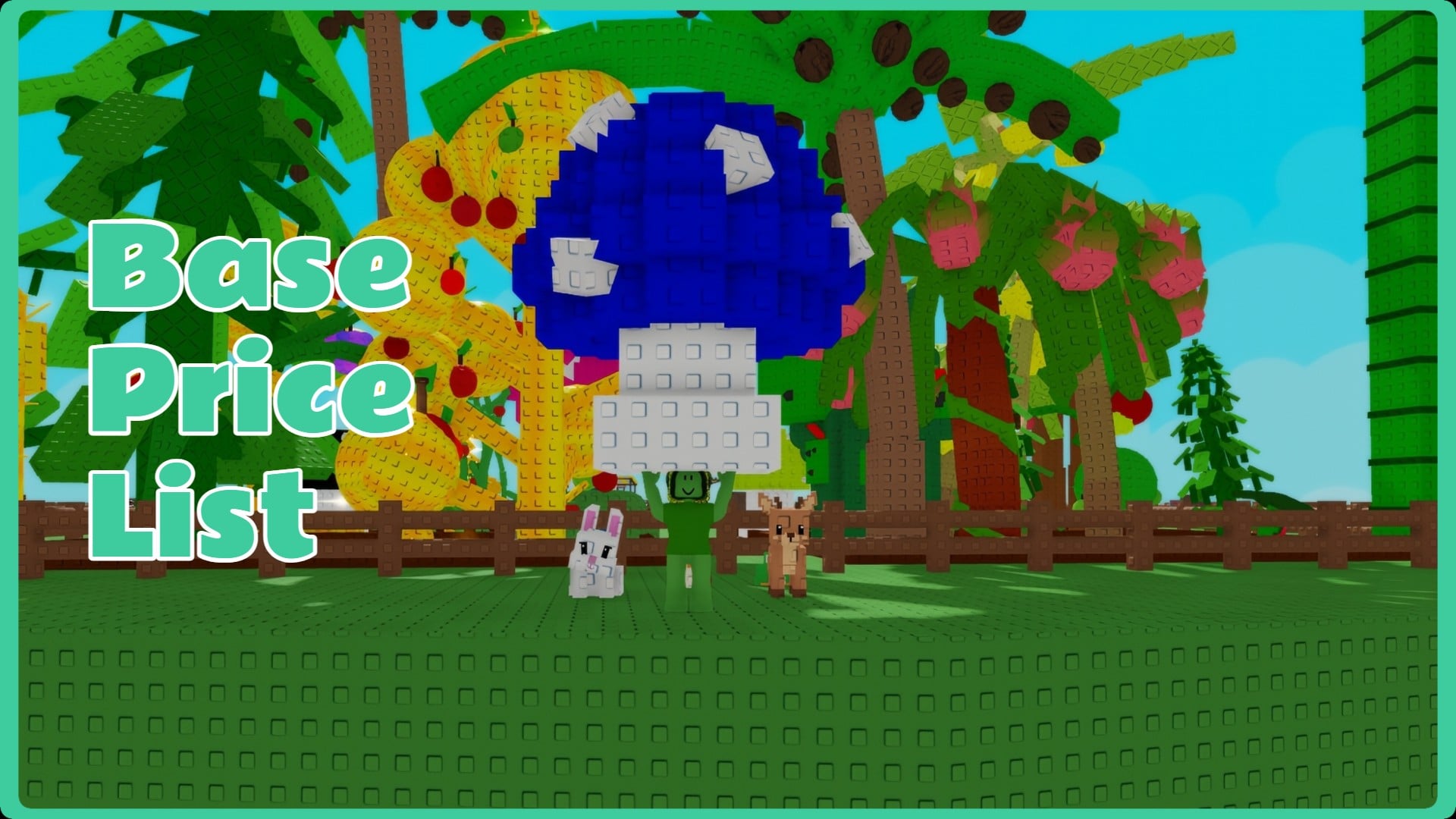
Grow A Garden 2 Base Price List
What's the most valuable crop?![Evomon Best Starter [Leafbun, Blazpup, or Bubble?]](/wp-content/uploads/2026/06/evomon-best-starter.jpg "Evomon Best Starter [Leafbun, Blazpup, or Bubble?]")
Evomon Best Starter [Leafbun, Blazpup, or Bubble?]
Grass-type, Fire-type, or Water-type?
![[Roblox] Evomon Shiny Hunting Guide – Including Prismatic and Pris Shinies!](/wp-content/uploads/2026/06/evomon-shiny-hunting-guide.jpg "[Roblox] Evomon Shiny Hunting Guide – Including Prismatic and Pris Shinies!")


iOS Reviews
Deadman’s Cross Review
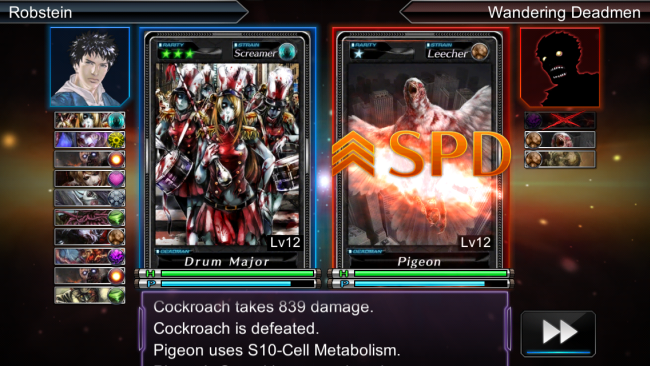
Collectible Card Games can be tough to balance, mechanically. If things are too easy, players will get bored. If it takes too long to accomplish goals or build up a formidable deck, they'll get frustrated. Deadman's Cross seems to be trying to hit that sweet spot somewhere in the middle, but ultimately it misses the mark. And in many ways, it's basically just Guardian Cross with zombies.You assume the role of a run-of-the-mill survivor during the zombie apocalypse - one who follows the government's instructions of staying indoors a little too closely. After three months of isolation (three months!), you finally decide to step outside. Of course the world is a wreck. Zombies, referred to as "Deadmen," are roaming around everywhere and society pretty much doesn't exist anymore. At least not in the same way that it used to. The only way to survive in this world is to pick up a gun and start blasting… and then recruit the defeated Deadmen as your own personal army. I swear I'm not making this up."Your time playing Deadman's Cross will mostly be spent by completing jobs in order to progress and earn special items. Jobs are mostly split between wandering through hallways, hunting Deadmen to add to your collection, and having card duels with anything that moves. There's also an arena where you can indirectly battle against other players' Deadmen in an attempt to earn even more fantastic prizes.Deadman's Cross is, as I've mentioned, incredibly similar to Square Enix's previously released Guardian Cross, but many of those similarities are actually its biggest strengths. Managing your horde is pretty simple and painless. You can feed unneeded Deadmen to more powerful ones in order to level them up, and it doesn't take long before you'll have a sizable force at your disposal.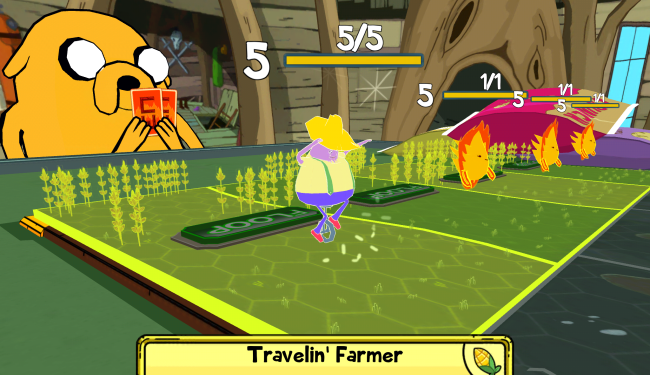
Card Wars – Adventure Time Review
On the list of animated shows I'm glad my daughter likes so I have a plausible reason to watch more of them myself, Adventure Time is right at the top (Littlest Pet Shop, in contrast, is last). So it's with great delight that I report that Card Wars - Adventure Time does right by the show and is better than most mobile card battle games, held back only a bit by its unnecessary two-pronged monetization.Fans of the series probably already know that Card Wars is a real thing in Finn and Jake's universe, kind of their own version of games like Magic: The Gathering. What you play in the mobile game is pretty darn faithful to what we've seen on screen, right down to some of the creatures and buildings, as well as "flooping the pig" — flooping being this game's version of tapping to activate a card's special ability."The biggest difference is that Card Wars - Adventure Time doesn't take that long to figure out, despite Jake's warning that there are lots of rules. Each battle has a setup phase that has each player lay out four landscapes on his or her side of the board. Creatures can only be played into their corresponding landscape, except for rainbow cards that can be played anywhere.Only one creature can be played at a time into each of the four lanes. All of them have varying mana costs to play, plus values for attack and defense. The other types of cards are buildings, which buff the creatures in their lanes, and spells, which have a variety of effects. The Volcano, for instance, wipes out everything in its lane on both sides of the board.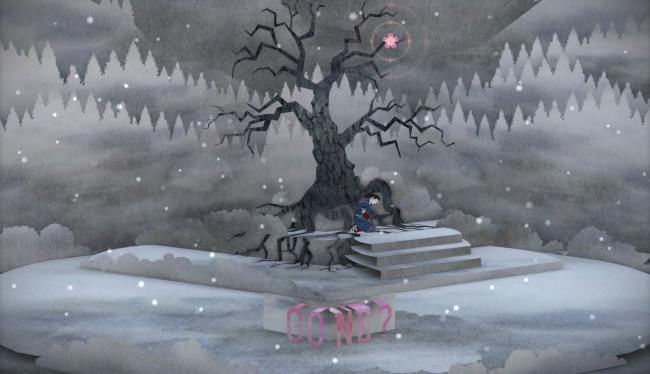
Tengami Review
I am excited about Tengami. Not because it's a particularly great game, but because it's a remarkable multimedia experience. At its core, it's a point-and-click adventure set in ancient Japan. But it's the rendering of the game world as a gloriously detailed virtual pop-up book, with scene transitions presented as turning pages that reveal a delicate, brilliantly beautiful two-dimensional realm, which makes it both unique and memorable.Everything in Tengami is rendered in 2D, even your avatar - a characteristic that becomes evident when he moves and reveals that he has no physical depth. There's no inventory, no attributes or skills, and no equipment or upgrades to make him more powerful; he simply walks and sails from place to place at your direction, and occasionally picks up a single item or interacts with a puzzle. It's a slow-paced journey through changing seasons, designed to give you time to really take in and appreciate the artistry of the environments. The music is every bit as good, and while the sound effects are relatively sparse, the first time I heard a wolf howling in the twilight my skin positively tingled.The controls are simple and intuitive, requiring only that you double-tap to walk to a spot on the screen and drag left or right to turn a page or pull a tab. Hotspots and area exits are well-marked, so there's never any question of where you need to go or what you can interact with.There are sometimes questions about what exactly you need to do, however. Tengami has relatively few puzzle areas, but when you encounter one it gives no indication of how to proceed. Midway through the game I spent a considerable amount of time struggling with a group of bells on a pagoda, only to discover that I was stuck because I hadn't gone to another area first and collected a particular item. The puzzle itself was actually quite simple, but it was a frustrating moment because I had no idea why I was unable to make progress. (In fact, it was only with the aid of another reviewer that I figured out where I'd gone wrong.)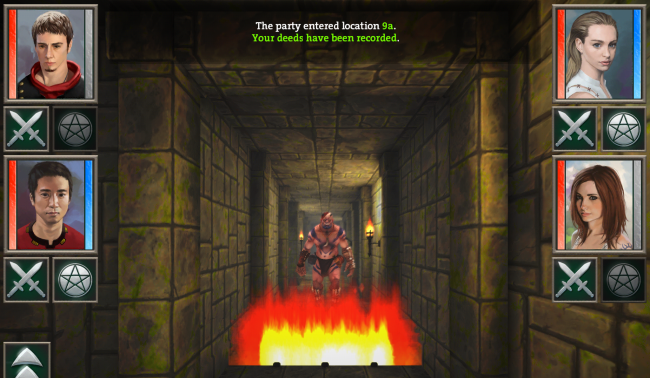
Coldfire Keep Review
The town of Newsettle needs your help! There's evil around every corner (careful not to step in any) and it's up to you and your stalwart band of newbie adventurers to delve into the depths of Coldfire Keep, uncover the source of the trouble, and put an end to it once and for all!A brief history lesson before we get going: The "dungeon crawler" is a type of first-person RPG, solo or party-based, with a focus on exploration, puzzle solving, collecting loot, and copious amounts of combat with a host of inhuman ne'er-do-wells. They were particularly popular in the 80s and early 90s, but by the mid-90s the genre had fallen out of mainstream gamer consciousness. In recent years, however, it's enjoyed something of a resurgence, driven largely by the 2012 indie hit Legend of Grimrock. (I delivered the same sermon in the lead-in to that review too, by the way. I like to keep readers informed.)Now along comes Coldfire Keep, and if you've ever wished that you could go digitally spelunking on your bus ride to work, I have good news: There are some rough edges, but in most of the ways that matter, this is a game that gets it right.Coldfire Keep follows four inexperienced adventurers as they investigate strange happenings in the ancient castle that lies just outside of town. In fine dungeon crawler fashion, that's the extent of the setup: Some monsters busted up the place and you're going to look into it because nobody else will. The tale gets a little deeper as you progress through the catacombs but it's perfunctory stuff, and the truth is that, much like climbing a mountain, you're diving deeper into the dungeon for no better reason than because it's there.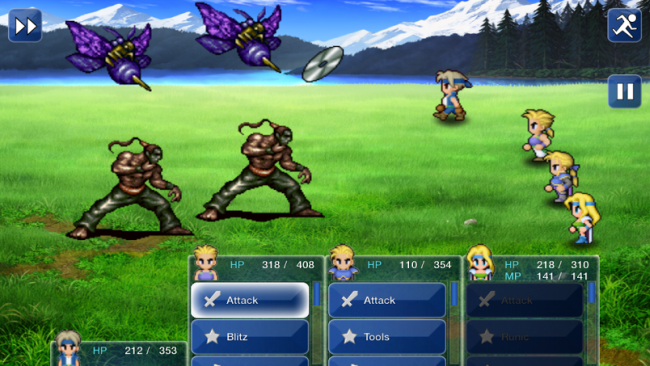
Final Fantasy VI Review
Another day, another controversial remake of a classic RPG from Square Enix. This time, the beloved SNES epic Final Fantasy VI is getting the "Vaseline treatment" - that is to say, this mobile rerelease has had its scenery and characters smoothed out to hide its pixel-based shame.The end result looks awful, but what's really important is how Final Fantasy VI plays on mobile. And, well, after all these years, the game still ranks amongst the best RPGs released during the 90s and early aughts, a golden era for the genre."Final Fantasy VI has a pretty ambitious story that's still compelling to follow. One thousand years after the destructive "War of the Magi," magic vanished from the planet and was replaced by steampunk and other technology. Magic and the people that used it faded into legend - but a slow trickle of magic is coming from an unidentifiable source, and it's enough to send the land's Emperor on a hunt for this ancient power.War quickly follows, and the conflict grows until the apocalypse cracks the earth, poisons the water, and mutates the animals. No, really.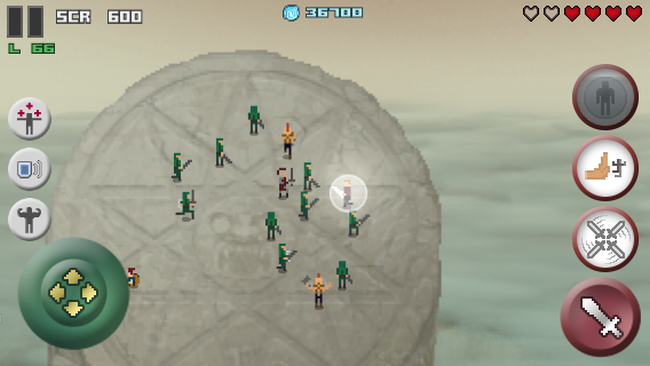
Only One Review
Before I even knew what was happening, I had a magical sword in my possession and the bad guys were teleporting in to try and kill me. Naturally, I reacted as any magic sword-wielding hero would when facing down a horde of enemies: I paid $1.99 and froze them all with my newly purchased frost spell —but only after I had to put the fight on hold in order to decline rating my experience thus far.Only One is a fun game that is hampered by constant, tacky reminders that you can spend your money in the game to power-up your hero. While it would be silly of me to say that a developer has no right pointing the player in the direction of where the in-app purchases reside, I feel like it's counterproductive to stop the game every time a new pair of items in the store are available to purchase. Point the player in the store's direction the first time it becomes available; anything beyond that and it feels like a nagging merchant following you through the flea market, trying to get you to buy his stuff.Ignoring the bouncing arrows and pop-ups reminding the player to rate their experience, Only One is a relatively fun game. Developed by Ernest Szoka, Only One is a top-down sword fighting game where players battle atop a mystical battleground, high up in the clouds. Enemies teleport in as others are dispatched and they can all be killed with sword attacks or magical abilities that the player unlocks by spending the points they collect from slaying other enemies. Kill an enemy and they drop loot; knock an enemy off the side of the battleground and more points are awarded, but the majority of the loot will follow the doomed opponent off the edge.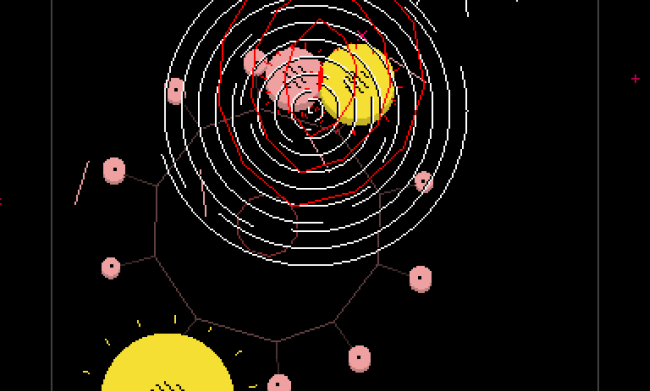
Eliss Infinity Review
First released back in March 2009, which was literally like the prehistoric ages for the mobile gaming world, Steph Thirion's Eliss has often been considered by many to be the first truly great mobile game. After one playthrough of the newly refined and expanded rerelease, Eliss Infinity, it's hard not to see why. But what's so amazing about the experience is that not only was the original Eliss such an innovative game for 2009, but the challenging mix of arcade and puzzle gameplay has managed to stand the test of time and remain insanely relevant and accessible even today in 2014.For those new to the world of Eliss, the gameplay is deceptively simple: you'll be presented with a number of different colored planets that slowly materialize in the vastness of space. You can touch and drag any planet to move it around the screen, and combining any two like-colored planets will create a new larger one. Conversely, stretching two fingers apart on any one planet will split it up into two smaller ones. As time goes on, several color-coded portals will begin popping up around the screen, and it's your goal to maneuver your different planets in order to fill each one (keeping in mind that the portal and accompanying planet must be the same color and size)."Things start to get tricky early on, as you realize that different colored planets are not allowed to touch. If they do, a green health bar at the top of the screen will quickly start depleting, and if it empties all the way then you'll have to start over. It seems easy to keep the colors separate at first, but once new planets start spawning over already-existing ones of a different color, or when some planets get so big that it becomes hard to maneuver them to the portals without banging into the edges of others, you'll quickly understand the game's immense and rewarding sense of challenge. And that's without even mentioning the various hazards like moving red vortexes which only complicate things even further.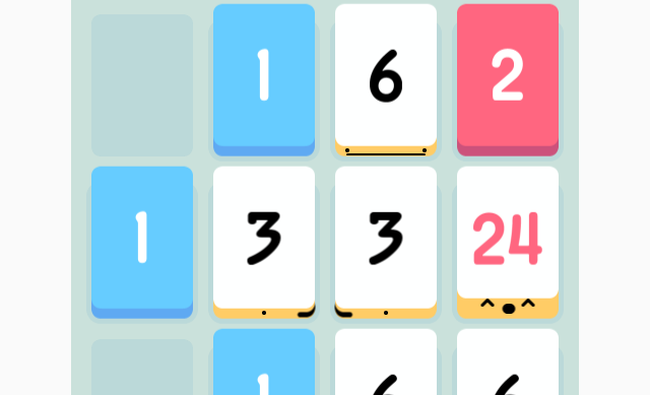
Threes! Review
Over the past two years, the three-man team of Sirvo LLC has been narrowing in on mobile gaming gold. Although their only title as a trio was the brilliant Tetris-meets-SpellTower mash-up Puzzlejuice, their Midas Touch spread through the App Store via individual roles on critically-acclaimed games such as Hundreds and Ridiculous Fishing. After regrouping from their award-winning walkabouts, Sirvo's sophomore offering is another puzzler, and one that sets the bar even higher than it was already stratospherically placed.Threes! is the definition of deceptively simple. Its one-touch gameplay requires seemingly nothing more from players than the ability to swipe up, down, left, or right. Doing so will slide all tiles on its 4x4 game board in that same direction, with one of two results: either the tiles will simply move, or they will combine with other tiles. This is all you have to do to play Threes!, but it's only the beginning of its strategy and depth."Your overarching goal in Threes! is to create larger and larger numbers by combining like-numbered tiles. While Threes! appears mathematical at first glance, it's strictly a matching game. When two tiles with the same number cross, they will merge into one new tile featuring their sum. So, two "3" tiles become one "6" tile, two "12" tiles become one "24" tile, etc. The only exception to this rule are "1" and "2" tiles, which must combine together to create a "3" tile. The purpose of these numerical Voltrons is twofold: first, larger numbers are worth more points towards your final score and second, merging tiles clears space on the board. Since the game ends when the board fills up (and no other matches are available), this is a key component to progress.These core aspects are vaguely similar to Triple Town, but Threes! is only lightly reminiscent of the anti-bear match-3 game. Combos in Threes! can only be made within rows or columns that are butted up against the walls of the grid; otherwise, the tiles will simply shift to fill open spaces. This allows freedom to rearrange the grid when needed, but while creating the added demand of filling a row before you can merge tiles.