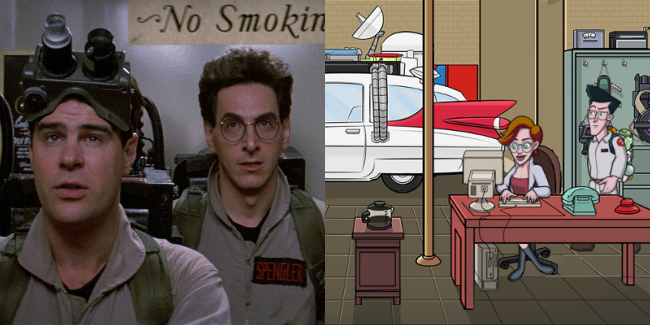
Harold Ramis was one of the greats. If you're in your thirties and love comedy, there's a very good chance that Ramis played a huge part in that. You probably know him as Egon Spengler in Ghostbusters, but he was so much more. Ramis wrote Animal House, Stripes and Meatballs. He directed Caddyshack, Groundhog Day and National Lampoon's Vacation. In short, he created everything you ever loved about comedy. And as of today, sadly, he's no longer with us.The only proper thing to do tonight is to cancel your plans, microwave some popcorn, and break out your favorite Ramis flick. For me it'll be Caddyshack. But hey - if you can't do this, we're not going to judge you. As much as you might want to go home and watch SCTV until your eyes hurt, we know you have other obligations.So maybe instead of enjoying a Harold Ramis classic, you can stick one of these games on your phone in your travels tonight to remind you of his work instead.
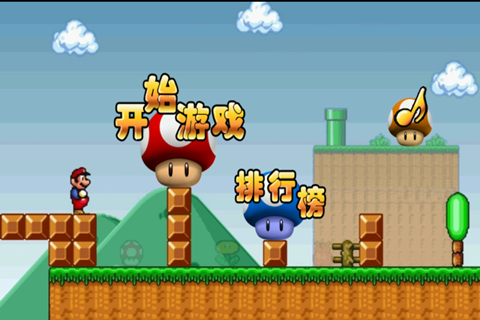
2014 seems to be the year of copyright. Whether it's King's CANDY crisis, the Flappy Bee incident, or the ASTROIDS name change, IP protection seems to be the word of the day. And now, in China, Nintendo is fighting its own IP battle - and it's over the unauthorized use of Mario.And believe it or not, this isn't even the only infringement story coming out of China this week!Thanks to our partners in China, Laohu.com, bringing us the latest news out their country as they do every Friday. For day-to-day happenings in China, be sure bookmark Laohu.com.
Nintendo gets criticized a lot for making the same games over and over. That's not really true; they make very different games that use the same characters and tones over and over. That's the Nintendo double-tap - their games look and feel like something we've seen a thousand times while throwing out the opportunity to build on what came before.That's the biggest problem with Steel Diver: Sub Wars, and my greatest fear for Nintendo's future forays into free-to-play.Let's back up. I'm getting ahead of myself by calling it "free-to-play." Actually, that may have been Nintendo. Or maybe, rather than jumping the gun, they're simply behind the curve again.
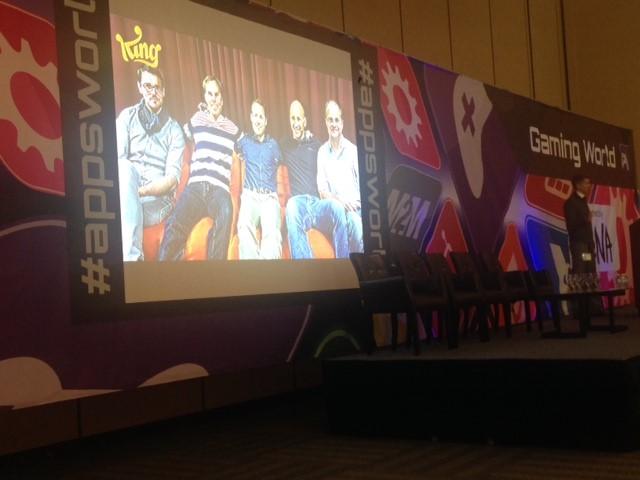
A few weeks ago, AppsWorld 2014 North America took place at San Francisco's Moscone Center, presenting two days of cutting edge discussion on the app industry, its present, and its exciting future. During the conference, Steve Wozniak, co-founder of Apple, was the official keynote speaker, answering questions and discussing his time at the company. Many exciting sessions were held focusing on general development, the Android platform, gaming, enterprise, and tech.Speakers from various genres and backgrounds presented their ideas of the industry, including Seth Sternberg, Product Management Director for Google, Jonathan Karon, Product & Engineering Manager for New Relic, Randy Hunt, Creative Director of Etsy, and Tim Hundt, Senior Enterprise Architect of GE Capital.
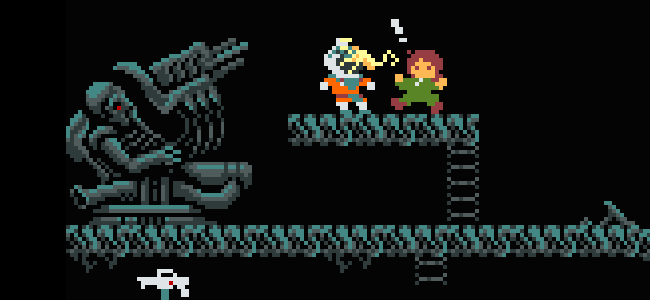
While the endless debate about what does and doesn't constitute a clone will forever rage on, I found myself playing a little something this past weekend that was a perfect homage to two of my favorite things: Donkey Kong and Alien.Donkey Me, a freeware trip down memory lane from developer Bruno R. Marcos, takes the Donkey Kong formula and reskins it using classic movies from the 1970s and 1980s. Star Wars, The Exorcist, Big Trouble in Little China - the selection is surprisingly rich. I won't spoil all of the surprises, so I'll just say this: Alien/Donkey Kong is exactly the game you want it to be.Instead of battling against the big ape, the first stage gives you the space jockey. Rescuing Kane at the end of the second stage results in a pixelated chest-burster. There's even an appearance from Jones the cat if you can push through to stage number three.
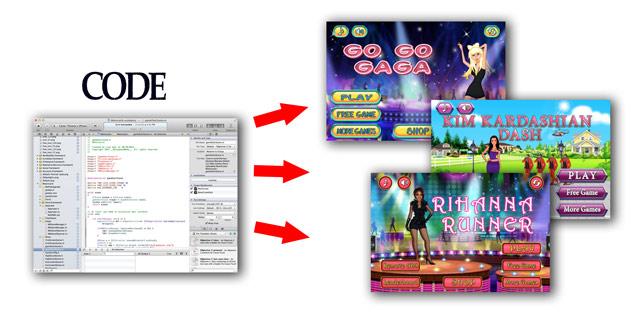
When you think of the slimy folks who clone games on the App Store - the folks with purely profit-driven motives - the words "open" and "honest" probably don't spring to mind. And yet that's exactly what the post I'm about to share with you is: an open and honest look at the world of cloning games for fun and profit.First brought to our attention by Quartz, Carter Thomas' blog entry "How I Went From $1,000 to $200,000 With Apps" outlines just about everything you'd ever need to make a profitable clone of your own."DO NOT try to build something from scratch," Thomas' blog post reads. "This is not about pride or being a revolutionary. This is not about your idea being great. This is about making money." As you probably suspect, this statement very much sets the tone for what's to follow. What you might not expect, however, is how good his advice is. And not just for shameless cloners, but, well… everybody. Or, at the very least, everybody who develops free mobile games. For example;
The United States leads the way when it comes to the consumption of digital content, a glimpse of the future can be had by looking at the East, and games, especially mobile games, are the current kings of digital media.Those are just a few of the insights to be gained from a new joint study from App Annie and global research firm IHS, the first to be produced by the combined efforts of both organizations. The report takes a detailed look at trends across all kinds of digital content — including digital games, game apps, other kinds of mobile apps, movie and music streaming — and also identifies how the markets in different countries differ.Probably to no one's surprise, digital games led the way globally in 2013. Consumer spending on games rose to $34 billion last year, accounting for more revenue than online movies and mobile apps combined.That number includes all types of games with digital distribution, such as online PC and browser-based titles, digital downloads on consoles and mobile game apps. But it's the last of those subcategories that has been driving the overall growth. In seven key markets (the U.S., U.K., Germany, France, Russia, Japan and South Korea), spending on mobile games distributed through the iOS App Store or Google Play rose 2.9 times between 2012 and 2013, whereas spending on the entire digital games category in those same nations was up only slightly year-over-year.
While a lot of individual developers have voiced concerns about King's trademark filings (as first reported by Gamezebo back in January), there hasn't been an official, collective show of opposition to what's transpired - at least not until right now.The International Game Developer's Association has just released the following statement from Executive Director Kate Edwards and their Board of Directors, regarding their stance on King's actions around protecting their IP with trademark law;


![All VV Ultimatum Titles [How to Get]](/wp-content/uploads/2026/06/vv-ultimatum-titles.jpg "All VV Ultimatum Titles [How to Get]")