Into The Box is a mouse-only arcade game where players guide themselves through rapidly appearing rectangles. Passing through the rectangles is the only way to progress into the next area of rectangles, which more rectangles then quickly appear within. As one can imagine, the game is not exactly friendly for players who suffer from motion sickness or have a paralyzing fear of endlessly falling through brightly-colored shapes.The more rectangles the player passes through, the higher their score will be. Unlockables are attained once the player breaks through an established high-score tier. The unlockables include score multipliers, different soundtracks, and an "auto-pilot" mode which, at a 1500 score requirement, I may never find out what exactly that does (my best high-score is 196)."Developed by Tarik Kaya, of the Kayabros, Into the Box recently released for free on Google Play. Into the Box is also available to play in-browser on Kongregate, Itch.io, and Newgrounds. As the game continues to grow in popularity, many have questioned Kaya's reasoning for releasing the game for free, without any ads to support him either.
With so much business wheeling and dealing, sometimes it's easy to forget that China is a nation enshrouded in communist principles. This week's Chinese gaming news brings a subtle reminder of that - though it certainly brings a fair share of capitalism-loving financial actions too.Thanks to our friends at Beijing-based Laohu.com for sharing this news round-up with our Western readers. If you're looking for Chinese gaming news daily, be sure to give them a look."
In the corporate world, even long-awaited good news doesn't mean there isn't bad news for some people in the organization.That was the case for Disney Interactive, which despite turning a profit in the last quarter of 2013 on the strength of Disney Infinity nevertheless laid off 700 employees this week, or just over a quarter of its total workforce. Along with the job cuts, the division is closing several offices in the U.S., plus one each in South Korea and India.As you might expect with such a drastic reduction in headcount, Disney Interactive will simply develop less games moving forward, relying on partnerships with outside studios instead. It also may avoid big ticket purchases, as many media reports are spinning the company's latest move as a referendum on its 2010 acquisition of Playdom.
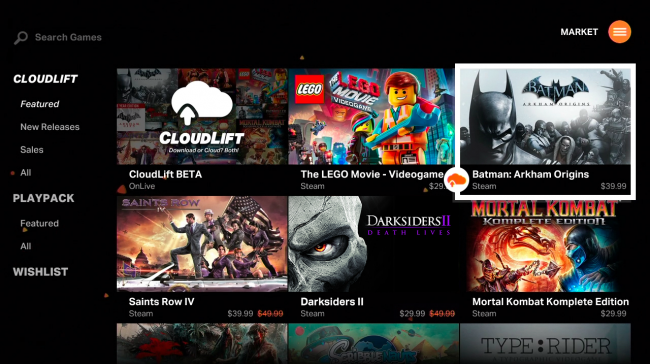
OnLive, the company that helped spearhead the concept of cloud-based gaming, is back. Alongside it is a new Executive Chairman in the form of Mark Jung - formerly of VUDU and IGN - and a host of new concepts to potentially breathe new life into the old service.The group, which specializes in allowing players to stream PC games to nontraditional hardware over the internet, laid off all of its employees in August of 2012. A new company, also called OnLive, was started in its place, while all of its assets were sold cheaply to Lauder Partners for $4.8 million. CEO and founder Steve Perlman stepped down from his position and the service has been relatively quiet until now.A press release sent by the company this week states their plans for a new subscription, called CloudLift. The service is meant to allow players to use supported games they already have installed on their PC across multiple platforms such as tablets, Macs, OnLive's own streaming device and certain TVs."Apparently, any game supported by CloudLift should work despite where it was downloaded from, but purchasing a game from OnLive directly includes a seven day trial. The service normally comes at a cost of $15 a month.That's not included with the $10 a month "PlayPack" subscription, which provides access to streaming-only games from the OnLive library.
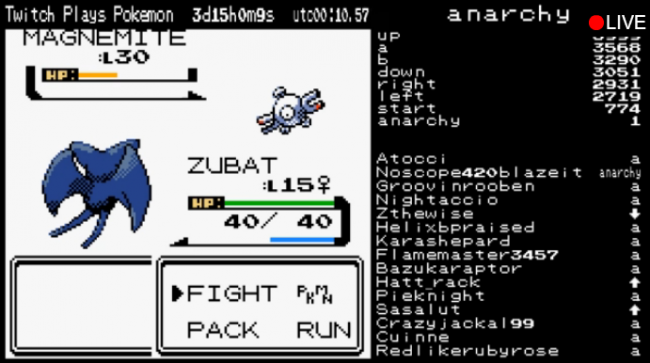
The future of mobile gameplay may be broadcasted and recorded, if Twitch has its way. Today, Twitch announced it is releasing a mobile SDK to enable the live broadcasting, video capture, and archiving of play in mobile games.So what? Startups Everyplay and Kamkord have been doing this for years. The big deal is that Twitch is so ginormous that I'm using the term ginormous instead of big.How ginormous? Twitch attracts 45 million viewers per month. That's bigger than Hulu. It's mobile app has been downloaded 10 million times, with an equal amount between iOS and Android. It's game streaming and broadcast service has created the genre of Let's Play videos on the PC, taken esports mainstream, and made League of Legends a household name. A recent Pokemon game on Twitch attracted hundreds of thousands of players. "And now Twitch is coming to the mobile phone.
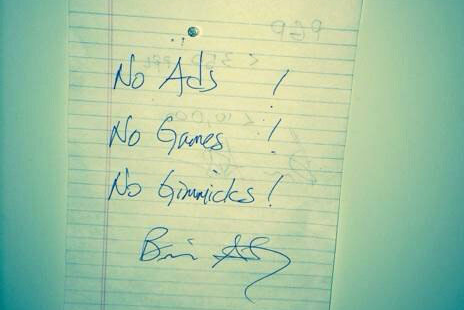
Now that a week has passed since Facebook bought WhatsApp for $18 billion, it's time for our obligatory post about it.Just to get it out of the way, I have no clue why Facebook bought WhatsApp for this amount. My guess is that Facebook's social network is dying (especially among teens) but its ad platform is revolutionary. Buying WhatsApp and its 450 million global users enables Facebook to remain on top for mobile and ads, though given WhatsApp owns no real data on its users, that's in theory. Mark Zuckerberg is far smarter and more successful than I, so I'll give him the benefit of the doubt.What does WhatsApp have to do with games? Absolutely nothing. But, messaging and chat could be the next big thing in games, Facebook and WhatsApp notwithstanding.WhatsApp really has nothing to do with games. Just look at the famous handwritten note between WhatsApp founders. WhatsApp has no interest in games, and the founders believe that this is partly the secret to their success. Given they just sold their company for $18 billion, they could be right.
In a blow to the hopes of people who champion the cause of microconsoles, the OUYA hasn't exactly taken the gaming world by storm since its launch. The Android-based box became a Kickstarter sensation, but some PR missteps hurt its public perception, (though Gamezebo is still pretty smitten with how things turned out).Ah, but what if OUYA wasn't just a game machine, but a platform in and of itself? That surprising revelation came from an interview OUYA CEO Julie Uhrman recently gave to [a]listdaily, flat out telling people to look for OUYA on other devices."Here's the money quote:"We started with a $99 box, but we always wanted to create a console platform that can live on other people's devices. We just knew it was going to take us a little bit of time to get it ready. Now we think the software is good enough, it's ready to be embedded in other people's devices."
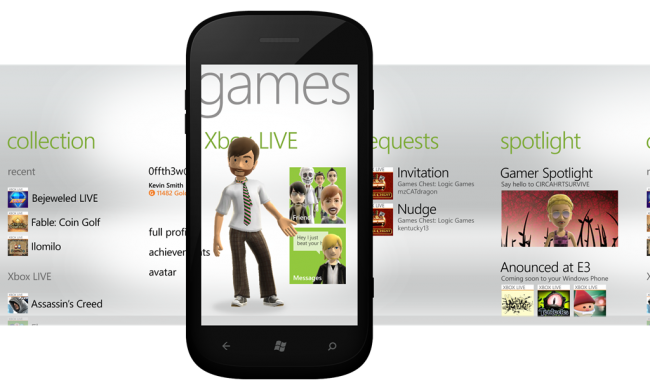
Until Sauron devises the One Service to connect all mobile games, we've had to make do with a patchwork quilt of systems to serve up achievements, leaderboards, friend notifications and the like. There's GameCenter for iOS, Google Play Games for Android, and products like OpenKit attempting to cover all the bases.But a familiar face with plenty of resources at its disposal might be entering the fray. Sources have told The Verge that Microsoft is looking to expand Xbox Live to offer mobile games some of the same features the service has provided to console games, even going so far as to create job posts looking for developers to aid in the initiative.


![All VV Ultimatum Titles [How to Get]](/wp-content/uploads/2026/06/vv-ultimatum-titles.jpg "All VV Ultimatum Titles [How to Get]")