With GDC only slightly in the rearview mirror (and Lucas Pope's big IGF with for Paper, Please along with it), it's time for the Independent Games Festival to look forward. And by forward, we mean Eastward. Namely, China.Why China? Well, if you take a look at our other news bites from Laohu.com this week, you'll see that some of those companies can put up some huge numbers - even on the stock market. And if the big guys are doing that well, great indie talent can't be far behind.Thanks again to our friends at Laohu.com for providing us with the latest gaming news from the Chinese market. For daily info that does the same, be sure to bookmark Laohu.com.
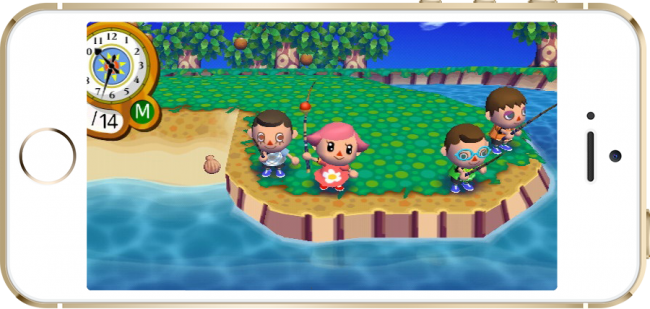
On a scale of one to 10, the news that an Animal Crossing game was coming to mobile devices would probably break right through and head for the teens.Alas, it appears mobile gamers will have to settle for mild enthusiasm. Series mastermind Katsuya Eguchi recently told Joystiq that while he could see Animal Crossing mobile apps that would give players an extra way to manage some aspects of their towns, he doesn't think smartphones and tablets would be a good fit for a full game.While everyone knows Nintendo has been steadfast in its decision to avoid bringing its IPs to mobile, Animal Crossing would be a brand that could make a smooth transition. The name alone would probably cause a launch day stampede to the App Store and/or Google Play.
Insight: you either have it or you don't. And if you don't, it's probably in your best interest to turn to someone that does. Thankfully the mobile gaming world has App Annie for that.The leading analytics firm for mobile apps and games released their latest 'Worldwide Games Index' report today, picking up on the hottest trends and observations from last month. We've combed through it to bring you what we felt were the five big highlights. If you want to see what we've missed, give the full report a read yourself at AppAnnie.com.
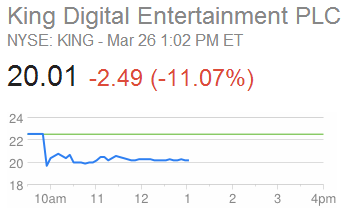
This quote from ever colorful CNBC personality Jim Cramer after King Digital stock began trading on the New York Stock Exchange earlier today should give you a hint:"It's a Stephen King horror story," Cramer said. "It might be Misery, it could be even Cujo."While there are plenty more (and better) puns that could be made from comparing the King IPO to the works of the master of horror, it's clearly not been a good first day for the company best known as the developer of Candy Crush Saga. After pricing its stock at $22.50 a share, King Digital has seen its stock price fall to as low as $19.08 in its first morning of public trading. As I write this, it's currently at $20.06 a share, down 10.8 percent on the day.
"Gamification" is a dirty word. Most don't mind seeing RPG elements worm their way into every genre of game, but mention doing it with fitness, learning, or your diet and those same people will likely roll their eyes.Europe's first-ever Newsgames Hackathon stands a chance of changing that.A "newsgame" is a gamified method of presenting journalism - be it a feature, opinion piece or a standard new story. The concept was successfully employed by the New York Times' "How Y'all, Youse, and You Guys Talk," an interactive quiz that became the site's most visited "story" of 2013. A hackathon (aka game jam) is when a group of artists, writers and designers gather in one place and build games in a very limited amount of time. It's a popular concept in independent development, and now The Good Evil and the Cologne Game Lab are teaming up to bring the concept to journalism.
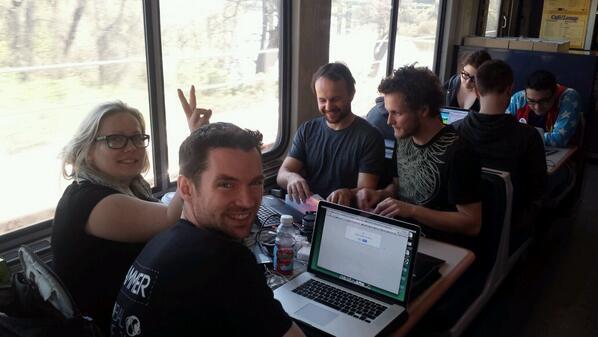
Game jams have become an increasingly popular way of helping developers connect, both to one another and back to their passions. It's interesting, then, that the first-ever Train Jam, a 52-hour game jam set entirely on a train from Chicago to San Francisco, their final destination GDC, was themed as "disconnection."Like any jam, the idea is to conceive, conceptualize and create a game in the allotted time based on the preconceived theme. Gamasutra's editor-in-chief, Kris Graft, ran a lovely trio of features on what sounds like just the first of many successful Train Jams and the games that resulted. Zoe Quinn, creator of the game Depression Quest, worked on a project about maintaining social connections while running the indie game convention circuit. Rami Ismail, one half of Vlambeer, the company behind Ridiculous Fishing, Super Crate Box and Luftrausers, was there as well. He made an Android game requiring him to physically fend off players from tapping an onscreen "D" (for Disconnect, the name of the game as well as the theme) on a tablet strapped to his back.
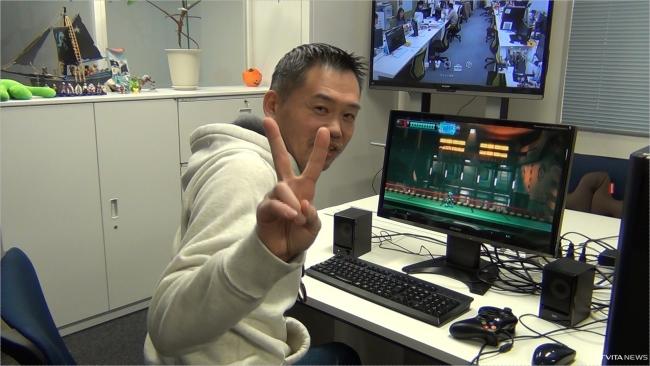
If anyone remembers the heyday of Japanese gaming's global domination, it's Keiji Inafune. The man responsible for Mega Man, Dead Rising and Onimusha has been a champion in the marketplace since the NES days. He recently left Capcom to form his own indie games studio, Comcept, and his first creator-owned project, Mighty No. 9.It's a pretty familiar story; we've seen plenty of notable developers go this route in the West. But in Japan, Inafune is an anomaly.And that might just be what's wrong with Japanese gaming.At a GDC panel last week dubbed "Meanwhile, in Japan," Inafune was joined on stage by Mark MacDonald of Japanese localization company 8-4. The two explored the cultural differences that have limited Japan's growth in the West, including their indie scene.
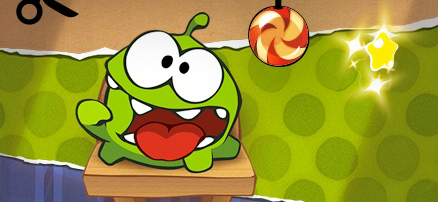
Let's face facts: nobody likes King's attempts to trademark the word CANDY. When the story first broke back in January, it was a public relations nightmare for King. In an attempt to protect their Candy Crush Saga IP, they obtained the trademark for the word CANDY in the EU, and were trying to do the same in the US.The games community - and indie developers, in particular - were quite vocal in their opposition to King's tomfoolery. But few have managed to take any sort of meaningful action, and those who've tried have been shut down in the most unseemly of ways. Just ask Albert Ransom.It took a body as big as the IGDA to seemingly pressure King to withdraw its trademark application on the word CANDY in the US.But what about outside of the US? To really make an impact in the EU, it was going to require a company that could bring out the big guns. Somebody with a game that's attained the same kind of household name recognition as King's Candy Crush Saga has. Someone like ZeptoLab, creators of Cut the Rope.On March 20th, ZeptoLab filed a claim in London that, if successful, will see King's EU trademark registration on the word CANDY cancelled.


![All VV Ultimatum Titles [How to Get]](/wp-content/uploads/2026/06/vv-ultimatum-titles.jpg "All VV Ultimatum Titles [How to Get]")