The first game I ever played on an iPad was a free version of Liar's Dice where you shook the device to roll the bones. At first, it was novel. After three goes, it was annoying beyond belief. This demonstrates two things: firstly there's a good reason why most board games stick to digital dice; but second, that there's still an aching desire to physically interact with something when you play a board game. Enter Dice+.It's a little rubbery cube which communicates with a range of mobile devices, including those running iOS and Android via Bluetooth, and takes the place of a physical dice. You roll it, and the number flashes on the uppermost face and is communicated to the game. It's slightly bigger than an average dice, but still rolls comfortably from the hand with a pleasingly tactile and weighty feel.It seems to work a distance from the mobile, so your numbers come up even when Dice+ rolls under the table. However, some anti-cheating technology built into the device means a small proportion of rolls don't register. Annoying, but a small price to pay to stop fraudsters from finding the six face and repeatedly dropping it directly on the table. It's charged via a port revealed when you slide up the one face, and a full charge lasts ages: about 20 rolling hours.
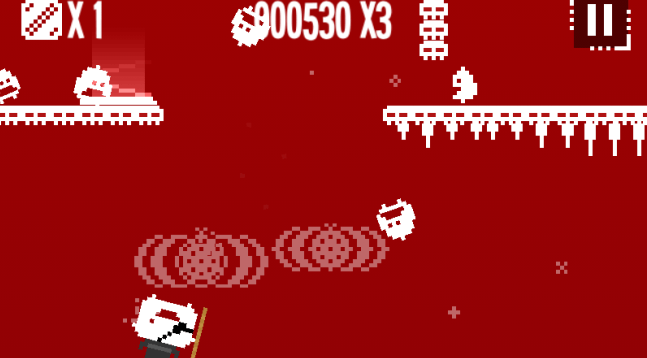
I'd imagine that Force of Habit, the Bristol based developers behind the zany arena shoot-em-up Toast Time, conjured up the idea for this game through a cocktail of sleep deprivation and missed meals. I can hear their mad proclamations in my head as I type: "We'd love to treat the team to a nice breakfast of eggs and soldiers, but our toaster's run off to save the world…"Toast Time begins with our heroic kitchen appliance-cum-agent of death TERRY (clever shorthand for Toast Ejecting Recoil & Reload system) taking a stand in the middle of a sky blue playfield as adorable alien assassins charge from all sides. This cosmic menace has their sights set on a ticking clock counting down to the end of one level and the beginning of the next, and it's up to TERRY to zap them with a lethal assortment of baked goods before they reach said timer, end the game, and impose Martian law on this fever dream of a planet.Dispatching enemies is as simple as touching them on your screen. TERRY will then launch his delicious projectiles in that direction, but to make the most out of the targeting system you'll often have to lead your shots. Movement is handled through the same system - instead of using an onscreen joystick, you fire at the ground, and the recoil from your blast sends you flying in the opposite direction in a gamey interpretation of Newtonian law.
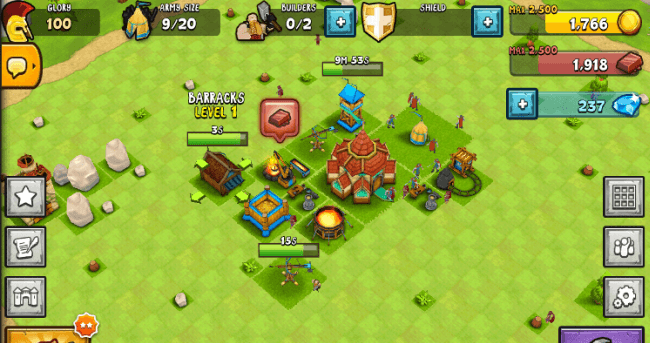
Greed for Glory: War Strategy enters the freemium field with exciting but strangely run-of-the-mill gameplay. It's similar to titles like Battle Dragons and Clash of Clans: the only real difference being a new setting and art style. But despite lacking any sort of innovation, PerBlue's medieval-themed building/combat sim will keep you strangely captivated for weeks on end. Just go easy on the diamonds, okay?Greed for Glory puts you at the helm of a small village looking to become more than a collection of wooden huts. Build new structures as you mine iron and gold, collecting as much currency as you can so you can raise a massive army of archers, knights, and wizards. With all of those trained soldiers milling around, might as well head out and attack nearby villages, right? Increase your fame (and your loot) by sacking other towns, slowly expanding and upgrading your base to accommodate your newfound power and glory.Greed for Glory sticks with the basics as far as building and resource management are concerned. A simple icon-based menu system allows you to choose which structures to place and where to place them. Quarries and mines pull iron and gold out of the ground, while barracks let you train troops to send into battle. Builder shops house workers, trebuchets fling stones at enemies, and still more buildings help you store your riches, upgrade your armies, and keep your village safe from attack. The screen is a little cluttered with information, but it's something you quickly learn to ignore, as what's happening in the center is far more interesting!
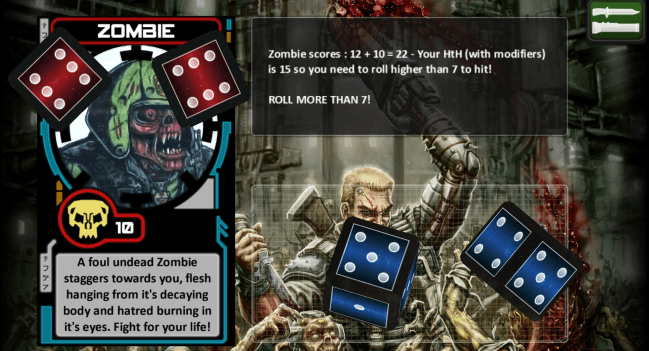
Back in 1987, Games Workshop released a solitaire board game called Chainsaw Warrior. It was an impressive innovation back then, before co-operative games or solo variants became common and it got bought and played for its novelty. Now it's been updated for the digital age, even though the intervening years have not been kind on the reputation of its cardboard parent.To play, you create a solider by rolling stats like hand-to-hand skill and reflexes on some dice and picking some equipment. Then you send your intrepid character into a skyscraper where an inter-dimensional rift has opened up, filling the building with zombies, rats, slime, and worse. Your journey proceeds by turning over cards and resolving the monsters and traps thereon, until you die, run up against the very strict turn limit, or meet and defeat the game's central villain for a victory."The original was cumbersome and time-consuming to set up and play, and gave you relatively little reward for all that effort. Mechanically, it communicated little sense of its action-packed premise and had virtually no strategy or decision-making, with almost everything being resolved by a dice roll. An app version obviously takes away the administrative overhead, which is a boon. And I was hoping it would follow up with slick presentation to get its sci-fi horror theme across.
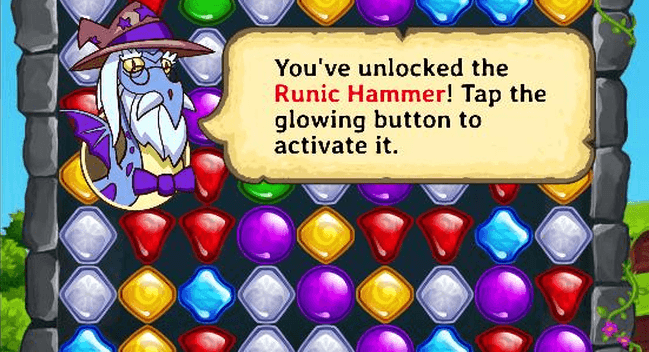
Match-three game Dragon Academy sets itself up as a sort of Hogwarts for dragons: contending that via match-three (or as they call it, "hatch-three") play, you can train up your own little fire-breather. Although you do indeed spend the majority of your time matching three or more colored icons, the dragon evolution that's supposed to be the other gameplay headliner doesn't really amount to much. Even worse, Dragon Academy plays host to a variety of fun-blocking bugs.Dragon Academy starts with a fairly confusing comic-book-style intro full of disjointed images that are often cut off by the game's display. The attempt at storytelling here, slight as it is, makes little sense. Fortunately, the game's name tells you all you need to know; the point is to take your cute little starter lizard named Melty, and help him gain access to dragon school. There's nothing particularly innovative about the gameplay here—in a nod to the game's theme, Melty is your main power-up and you charge him by matching icons the same color as he. Once he's charged, you can click him to sweep away whole rows of icons at once.Like many social match-threes, you're given five lives and can continue to play as long as you manage to meet each level's objective. You might have to reach a certain score, make potions drop to the bottom, or remove obstacles called "goo." As each level is cleared, you'll see little Melty move around a map, his overreaching goal being to defeat the Wobblins (a collection of weird reptile/goblin creatures who, for some reason or another, enjoy harassing dragons). As you progress, your dragon evolves and gets bigger and...that's it. There's not much else that happens with it except that its power-up has broader effect. As you go, other dragons unlock, which makes for some variety since they come in different colors and boast different power-up abilities.
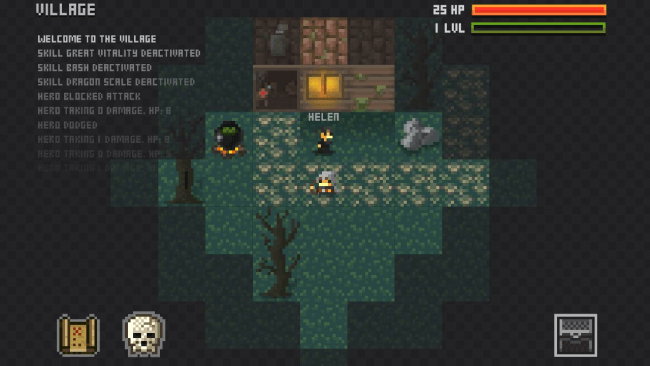
When you imagine what the average dungeon-crawler plays like, you most likely picture a game that looks identical to Hell, The Dungeon Again! This turn-based dungeon-em-up from Anton Skvortsov is the very definition of a dungeon crawler, with all of the elements that make up the genre clearly polished up and spat out in regular, as-you'd-expect succession.You know what you're going to get with Hell, The Dungeon Again!, make no bones about it - this is a tightly-designed experience that takes homage from dozens of other dungeon crawlers, and does much of it right. What this game doesn't do is, well, anything very new at all. If you're looking for a run-of-the-mill dungeon-goer, then Hell, The Dungeon Again! is your poison - but anyone looking for a more unique, bold, and clever take on the genre won't find those traits here."There's an evil presence in the church nearby, and you've been chosen as the hero who will dive in there and save the village. Once you've equipped yourself with some sweet kicks and sharp blades, it's time to jump in and graft your way through multiple floors of things that want to kill you.Everything is as you'd expect. Each floor is randomly-generated, as is the enemy placement, treasure placement, and boss selections. Moving around the dungeons is a case of tapping in the direction you want to go, then bashing enemies over and over again until they hit the deck.
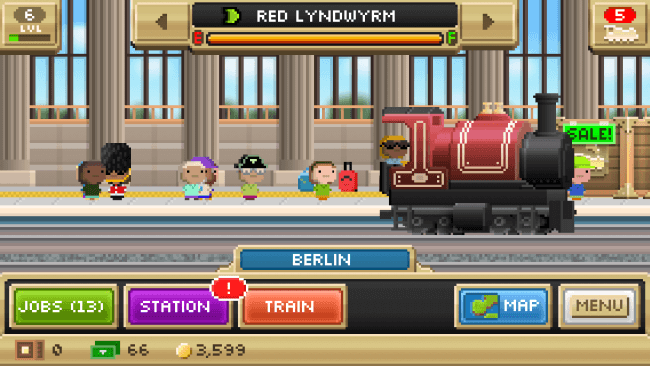
Open wide: Here comes the choo-choo train. In other words, clear your schedule because NimbleBit's done it again. Pocket Trains is the charming, highly addictive follow-up to last year's Pocket Planes. Like its predecessor, Pocket Trains is a lightweight simulation game that puts you in charge of heavy machinery and shipping routes. Admittedly, if you didn't enjoy Pocket Planes, nothing about Pocket Trains will appeal to you. Regardless of how you feel about NimbleBit's games, however, there's no denying the studio knows how to package freemium content fairly and compellingly.Pocket Trains puts you in charge of your very own railway (you don't get one of those cute engineer outfits, but you can pretend). You begin with a couple of engines and short shipping lines centered in Europe. If you stay vigilant, you'll have veins of rails reaching across Eurasia, Oceana, and even North America.True to NimbleBit tradition, however, you start small: all the better for showing you the ropes. The action in Pocket Trains revolves around making deliveries for cash (including cars filled with syrup and giant jars of pickles). The larger and longer your haul, the bigger your reward.
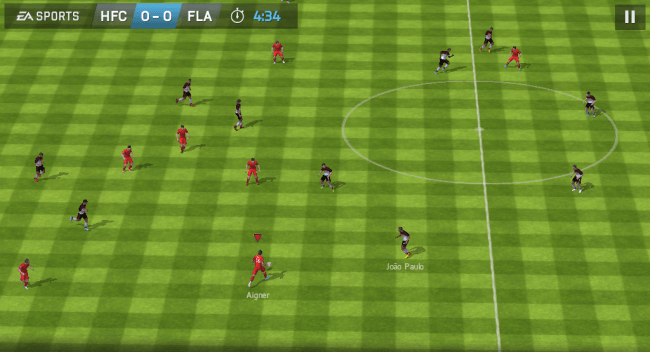
When it comes to gigantic companies like EA making mobile versions of their popular console games, the process is clearly a work in progress. There hasn't yet been a truly definitive version of Madden for smartphones and tablets, yet the newest foray into soccer, FIFA 14, is a surprisingly great way to play some football - and better yet, it's mostly free.One of the best things FIFA 14 has going for it is touch controls that actually work. Passing is especially slick, as a simple tap on a teammate will direct a pass toward him, with the game figuring out what kind of pass is needed based on how far away you are at the moment. You can also pass to space simply by tapping on a specific spot on the pitch, and the whole system is very effective."Shots, punts by the goalkeeper, and long clearance attempts are pulled off by drawing an arc on the screen with your finger, and if anything, shooting might be a little too easy in some cases. There's a little less precision on defense, though you can call for your men to pressure the current possessor of the ball with just a tap and go for slide tackles with a well-timed swipe. An option is in place to revert to a virtual thumbstick and buttons, but it's doubtful you'll want to go that route once you see what EA has done with touch.


![All VV Ultimatum Titles [How to Get]](/wp-content/uploads/2026/06/vv-ultimatum-titles.jpg "All VV Ultimatum Titles [How to Get]")