


![Headphones Review Round Up [Hardware]: SIVGA SV021, VR500, UX3000, and VR2000](/wp-content/uploads/2024/10/unnamed-5.jpg "Headphones Review Round Up [Hardware]: SIVGA SV021, VR500, UX3000, and VR2000")
Headphones Review Round Up [Hardware]: SIVGA SV021, VR500, UX3000, and VR2000
Update: SIVGA SV021 tested and rated!![Boulies Elite Max Chair [Hardware] Review – Assemble, Adjust, Relax](/wp-content/uploads/2024/08/boulies-elite-max-chair-review.jpg "Boulies Elite Max Chair [Hardware] Review – Assemble, Adjust, Relax")
Boulies Elite Max Chair [Hardware] Review – Assemble, Adjust, Relax
What do we think of the Boulies Elite Max Chair?![Red Magic 9S Pro [Hardware] Review – The New Standard For Mobile Gaming?](/wp-content/uploads/2024/07/red-magic-9s-pro.jpg "Red Magic 9S Pro [Hardware] Review – The New Standard For Mobile Gaming?")
Red Magic 9S Pro [Hardware] Review – The New Standard For Mobile Gaming?
My Red Magic 9S Pro Review puts this incredible bit of tech through its paces to determine whether it's worth your money.
![[Roblox] Evomon Shiny Hunting Guide – Including Prismatic and Pris Shinies!](/wp-content/uploads/2026/06/evomon-shiny-hunting-guide.jpg "[Roblox] Evomon Shiny Hunting Guide – Including Prismatic and Pris Shinies!")


Category: Reviews
Pandemic Review
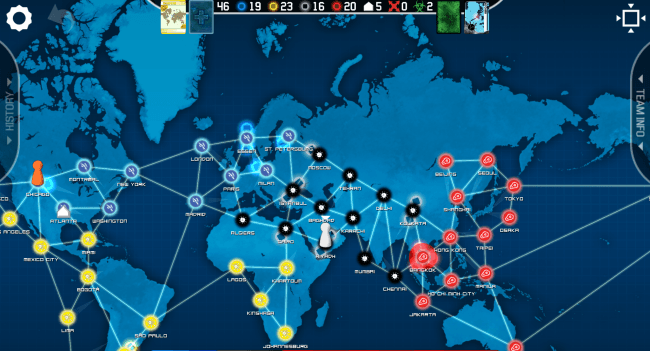
Pandemic is the original co-operative board game that launched a thousand sickly imitators. It's winning combination of being easy to learn, difficult to beat, and lacking competition made it brilliant family fare; a hobby title that's bled into the mainstream. But of course co-operative games also work well played solo, and now you can play it both ways on your iPad.The players control a team of specialists trying to cure four lethal diseases before the game triggers one of a terrifyingly broad range of fail conditions. Each player has a hand of cards, corresponding to a color and a city on the board. You can move slowly from city to city, maybe spending precious actions to remove disease cubes as you go, or play a card to fly directly to the matching city. If you're lucky enough to accumulate five cards in the same color and can get to a research station, you can cure the disease of that colour."What makes the game special, and absolutely terrifying, is its simple yet brilliant infection mechanics. After a player takes a go, city cards are drawn from a different deck and disease cubes are added to those locations. But if one already has three cubes, an outbreak occurs: a chain reaction which also infects all neighbouring cities. If one of them has three cubes, it sets off another outbreak. This means the situation can go from calm control to complete chaos in the blink of an eye.
Marvel Puzzle Quest: Dark Reign Review
If the Marvel super heroes knew all they had to do to defeat all kinds of villains was to beat them at match-3, they'd probably be a lot less angst-ridden. To date, no comic book writer has actually decided to act on this idea, but Marvel Puzzle Quest: Dark Reign comes close. Taking the core gameplay from Puzzle Quest and fusing it with the video game version of an actual comics storyline might sound strange, but it actually comes together pretty well.Taking the baton from other Marvel mobile and social games like Marvel: Avengers Alliance, Marvel Puzzle Quest takes place after The Pulse, which sounds like something from Dimension Films but is actually a mysterious event that introduced the world to Isotope-8 (or just ISO-8, for short). The new element can make super-powered folks even stronger, and is thus coveted pretty highly by the forces of evil.Though you only get a cursory introduction to all of this if you haven't played the other games, S.H.I.E.L.D. has been keeping tabs on ISO-8. The new twist here is that Norman Osborn, the artist formerly known as the Green Goblin, has wormed his way into a position of power, and his H.A.M.M.E.R. organization has booted Nick Fury and company out of favor with the world's governments. This can all be a little overwhelming if you aren't versed in the source material, which might be the game's most glaring weakness.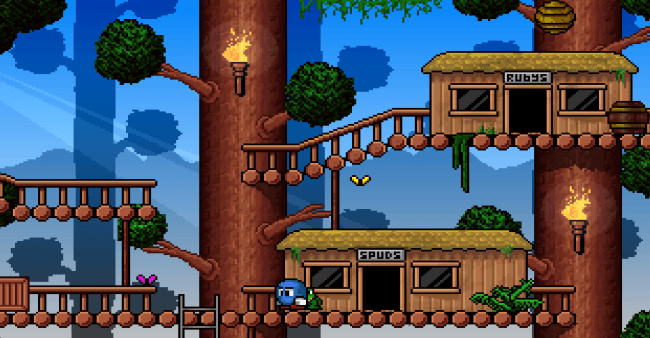
Spud’s Quest Review
I'll be honest: I kind of freaked out a little when I saw that Spud's Quest was a straight-up homage to Codemasters' iconic adventure game The Fantastic Adventures of Dizzy. There was probably no other video game I played more when I was a kid, and it took my parents and I a solid three years to finally complete the fearless egg's adventure (back when there were no such things as save points or online walkthroughs). I saw the resemblance in Spud's Quest the second I booted up the game, but after actually playing it, I found that our little potato's big quest to help a prince-turned-frog is so much more than a simple homage to an adventure gaming great: it's a fantastically retro adventure that rightfully stands on its own as an essential crash course in inventory-based adventure gaming.Players familiar with the wildly fantastic worlds of Dizzy the egg (and in particular, The Fantastic Adventures of Dizzy) will find that the majority of Spud's Quest plays out like a giant fine-tuned homage to one of gaming's greatest and oft-forgotten adventure heroes of old. Blatant echoes of Dizzy can be found at nearly every turn in the game: from the starting environments like the treehouse village and the rocky mines; to the familiar items you'll find and their overall uses; and even right down to the layout of the land itself, with the lake leading into the town to the left of the starting village. For compulsive Dizzy enthusiasts like myself, it provides a trip down nostalgia lane like very few other games I've ever played."But what's great about Spud's Quest is that for every reference the game gives to its Dizzy inspiration, it does three other things that are refreshingly new and unique to the adventure itself, and some of which I even wish we had seen way back in our prime Dizzy days. On a more basic level, you've got your much-needed save points, Zelda-like health upgrades, and a flurry of achievements and optional collectables to find. On the deeper end of the spectrum, you have engaging new environments like broken windmills and parked stagecoaches, and a slew of more complex features that accent the overall adventuring gameplay in a really wonderful way. Spud's Quest represents what The Fantastic Adventures of Dizzy could have been like had the creators kept the series going well into the 2010s, and added in some timely new features.LEVEL 22 Review
Gary is a bit of a lout. In this economy, a lot of people do whatever they can to keep their jobs, and that's not exactly untrue of Gary. See, Gary likes to party, and party he did last night, out on the town and drunk all the while. This has led Gary to oversleep, and now he's late for work.This might be forgivable, except this does not seem to be the first time Gary has let temptation get in the way of doing an honest day's work. As a result, he now stands to be fired if he is caught coming in late (his boss even has a wanted poster of Gary on his desk). So now in LEVEL 22, Gary is doing whatever he can to keep his job: In this case, engaging in covert stealth operations to reach his desk on the 22nd floor of his office building."Given that he's traversing the entire 22 levels by stairs and sneaking around to avoid being caught all the while, one would suspect he wouldn't reach his destination until it's time to punch out anyway, but we digress. This is the task at hand, and fortunately, you're not alone.Gary's friend, Marty, is an expert at this sort of thing. Incidentally, he also no longer works at this place of employ, though he says he got out of there. Whether he was really helped out remains a mystery, but in any case, he offers helpful tips to Gary along the way, which leads to incorporating a number of your surroundings: Hiding your face behind newspapers, crawling into closets, trunks, and vents, and using donuts to bait security guards.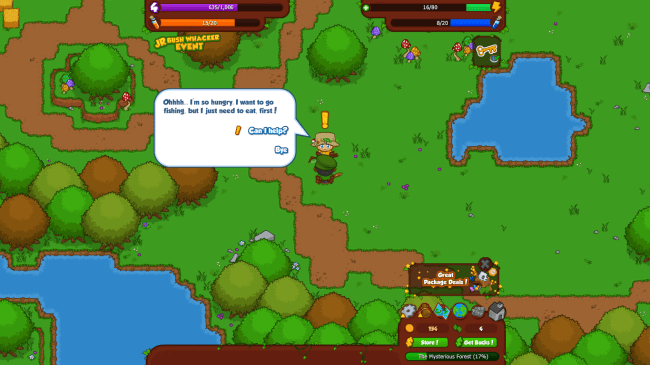
Bush Whacker 2 Review
Some people will tell you that Nintendo's Legend of Zelda series is all about exploring faraway lands, collecting treasure, and aiding a kingdom in peril. These people are wrong. The Legend of Zelda is about cutting down bushes and finding cool stuff under the foliage. Bush Whacker 2 obviously takes its inspiration from Zelda's weed-whacking, and the game is charming, if mindless, as a result. Unfortunately, a draconic energy system limits play to a stifling degree.Bush Whacker 2 casts you as a sea-faring hero who's in pursuit of princess-nabbing pirates. A storm whips up and blows you off-course. After some rocking and drifting, you eventually run ashore on a strange island with a weed problem. The key to moving ahead is to cut down as much of the fast-growing vegetation as possible."Bush Whacker 2 arms you with a sword, but the weapon isn't exclusively for giving enemies the business. As you progress from screen to screen, you come across dozens of bushes harboring items, prizes, and other secrets. Puzzle pieces are the most important thing you gain from cutting bushes, however. When you collect the allotted amount, you solve a jigsaw puzzle to open up a new path.
Candy Blast Mania Review
It seems for every mega-hit game there are ten shameless knock-offs. Match three game, Candy Blast Mania is an obvious riff on the absurdly popular Candy Crush Saga, complete with candy-colored icons, characters, and effects. Although there's some fun to be had here, Candy Blast Mania ultimately feels like Candy Crush's awkward younger sibling—less mature, less polished, and noticeably less interesting.Continuing to mention Candy Crush could sound like belaboring a point, but it's well-nigh impossible not to make comparisons between the two games so bear with me. First, let's acknowledge that the Candy Crush magic is based on several things: the music, the story, the maps, and the unusual, graphic look of the game. Candy Blast Mania seems to get this too and does its best toborrow from the Candy Crush style book. Even so, it never achieves the same impact."To begin with, the game's music is appropriately spritely. The problem is it's also repetitive and not particularly distinct. Lack of distinctiveness can also be attributed to the game's story, which is more or less nonexistent. While Candy Crush isn't exactly War and Peace, it does contain a simple little narrative which it conveys through cute, 2D animations, and by delineating different areas of its fun little map. By contrast, Candy Blast Mania'sstory is barely hinted at through periodic boss-battles. Winning these battles doesn't award you with anything, neither fun little story blurbs nor map changes, so you move from level to level with nothing to create a sense of achievement or progression.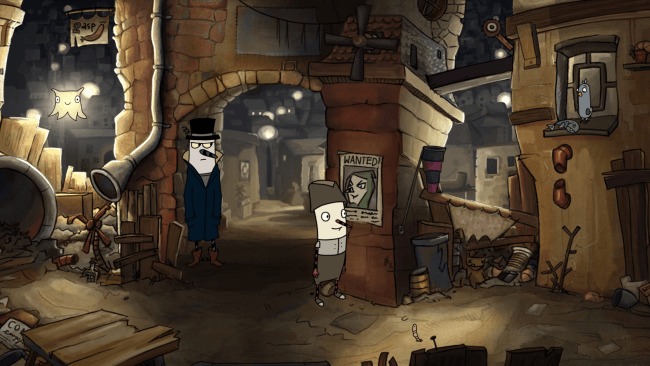
The Inner World Review
I strongly suspect that The Inner World is going to be one of those games that very cleanly divides adventure fans between those who enjoy its unapologetically old-school sensibilities, and those who find it unnecessarily drawn out and even tedious. It's quirky, cute, sometimes charming, and occasionally even clever, but it's also a paper-thin tale that's utterly, and somewhat tiresomely, dedicated to the warped conventions of "adventure game logic."The Inner World takes place on the inside-out world of Asposia, a hollow "planet" in a universe composed entirely of soil. The air that gives it life comes in through three great "wind fountains," and while the actual origin of the wind is a mystery, one thing is certain: it is slowly dying out. Only one wind fountain remains functional, guarded by the Abbott Conroy and his young assistant Robert. But things go haywire when Robert, a rather simple sort of fellow, befriends a pigeon; the pigeon makes off with the Abbott's most treasured possession and before he can be stopped, Robert takes off in pursuit - his first-ever journey beyond the castle's protective walls."The opening sequence very quickly sets the tone for the game, with simple yet surprisingly emotive hand-drawn graphics and excellent voice acting; and if there's any question as to the gravitas of the narrative, it's answered immediately by the Abbott's baritone command following Robert's surprise departure: "Bring me the hedgehog!" I was smiling throughout the introduction and laughed out loud at that line, but as I dug into the game I found that it wasn't able to maintain that level of sweet (and wonderfully strange) charm.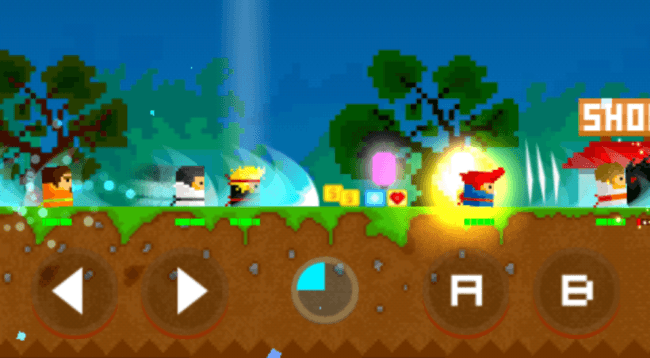
Nakama Review
Whether you're into the "float like a butterfly, sting like a bee" fighting approach, or you're perhaps more of a "crouching tiger, hidden dragon," it's safe to say that when it comes to being a ninja, your fighting style needs to be swift, controlled, and tight. You're not going to be around for very long if you can't dodge a simple shuriken to the face.Mobile ninja-em-up Nakama fails miserably to provide the sort of control that is required of a Shinobi warrior, while also piling on a rather confused difficulty curve, and action that is more a rambling bar fight than a well-implemented meeting of blades. There's style here for sure, but the gameplay itself needs a massive overhaul before it will approach anything that can be deemed entertaining."You are the last Shinobi of your village, and nasty enemy ninjas are looking to make sure you don't survive much longer. As you run to the right, each level consists of a couple of screens of generic ninjas to take out, before a slightly more tricky boss battle.Nakama's controls should be relatively simple. You're provided with A and B buttons - A slices, while B jumps. Hold A and you'll get a mega slice, while double-tapping B makes you rush through the air. You can also use a combination of A and B to slice through the air too. Sounds great so far - but in practice, it leaves a lot to be desired.