


![Headphones Review Round Up [Hardware]: SIVGA SV021, VR500, UX3000, and VR2000](/wp-content/uploads/2024/10/unnamed-5.jpg "Headphones Review Round Up [Hardware]: SIVGA SV021, VR500, UX3000, and VR2000")
Headphones Review Round Up [Hardware]: SIVGA SV021, VR500, UX3000, and VR2000
Update: SIVGA SV021 tested and rated!![Boulies Elite Max Chair [Hardware] Review – Assemble, Adjust, Relax](/wp-content/uploads/2024/08/boulies-elite-max-chair-review.jpg "Boulies Elite Max Chair [Hardware] Review – Assemble, Adjust, Relax")
Boulies Elite Max Chair [Hardware] Review – Assemble, Adjust, Relax
What do we think of the Boulies Elite Max Chair?![Red Magic 9S Pro [Hardware] Review – The New Standard For Mobile Gaming?](/wp-content/uploads/2024/07/red-magic-9s-pro.jpg "Red Magic 9S Pro [Hardware] Review – The New Standard For Mobile Gaming?")
Red Magic 9S Pro [Hardware] Review – The New Standard For Mobile Gaming?
My Red Magic 9S Pro Review puts this incredible bit of tech through its paces to determine whether it's worth your money.
![[Roblox] Evomon Shiny Hunting Guide – Including Prismatic and Pris Shinies!](/wp-content/uploads/2026/06/evomon-shiny-hunting-guide.jpg "[Roblox] Evomon Shiny Hunting Guide – Including Prismatic and Pris Shinies!")


Category: Reviews
Strike Wing: Raptor Rising Review
Strike Wing: Raptor Rising is the odd case of a pretty good game which just doesn't quite have all it needs to sink its hooks into you. It does have quite a bit going for it, as you are greeted with a choice of control style, ranging between touchscreen joystick and gyroscopic tilt steering; and what's more surprising than it should be in this business, the touchscreen controls are actually quite good. Accompanying the slick controls, which also include buttons for firing, boosting, and slowing down, are some very nice graphics and suitable (if not particularly catchy) music and sound effects for your space dogfight.And a dogfight is just what it is, as you engage the enemy in a full 360-degree field of battle, shooting at the enemy fighters with the help of your wingmen. There is also the boast of adaptable enemy AI, changing as you play, but it can be a bit difficult to notice, at least earlier on. Fortunately, locking on to enemies is pretty simple, as you don't need a precise lock on your targets to score hits: just getting them inside the wider targeting reticule is often enough to engage a small degree of auto-targeting from your guns, alleviating what could have been a rather frustrating experience."The game is broken up into missions, and this is where things begin to falter. Each mission contains a different scenario or end objective, but there isn't really anything to tie them together. It's essentially a high-score game, and while that's not bad—we're certainly not ones to say games must have a story—something about it just feels kind of lacking without one.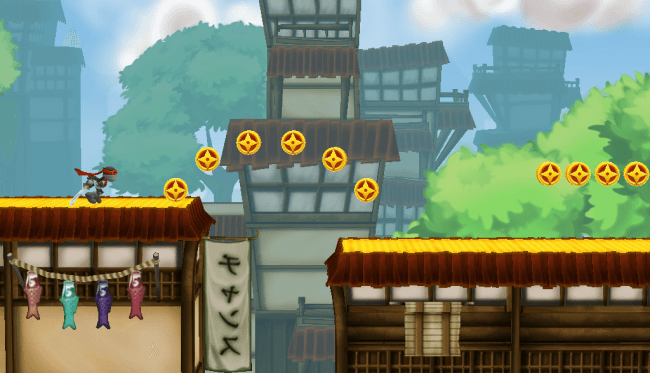
NinJump Rooftops Review
NinJump Rooftops brings us back to a time when the App Store was just starting out, and simple timewaster games like Doodle Jump and Can Knockdown ruled the mobile scene. In fact, Backflip Studios' own NinJump used to be the talk of the town around these parts in 2010. However, it's not 2010 anymore, and with so much gameplay innovation and graphical prowess shaping the world of mobile gaming as we know it today, can these basic little timewaster games still hold a place in our age of high-end graphics and deeply immersive gameplay?Much like everything else in NinJump Rooftops, the concept is simple: you are a ninja, and you have to run along the endless rooftops, while avoiding hazards and taking out enemies with your ninja jump attacks. The controls are equally simple, with one tap anywhere on the screen corresponding to making your ninja jump, a second tap entering into a double jump, and holding down on the screen increasing the height of your jump. The gameplay itself is of the sidescrolling endless runner variety, and Backflip Studios uses some pretty nice 3D visuals to bring the world to life (although your scenery will be strictly limited to the Asian-inspired rooftops, and there's never much of a variety no matter how far you manage to make it during any one of your runs)."So you'll be running and jumping as par for the course, and picking up tons of gold coins along the way which you can use to buy power-ups that give you an extra added edge. The power-ups are also standard endless runner fare, with magnet boosts that draw surrounding coins towards you, and a big blue rocket that lifts you up and saves you if you happen to fall. You'll also be met with your fairly typical in-game goals, such as "Collect X amount of coins over time" or "Run X amount of meters in a single run." Completing these objectives will net you more additional coins, which can then be used to buy more power-ups, and so on.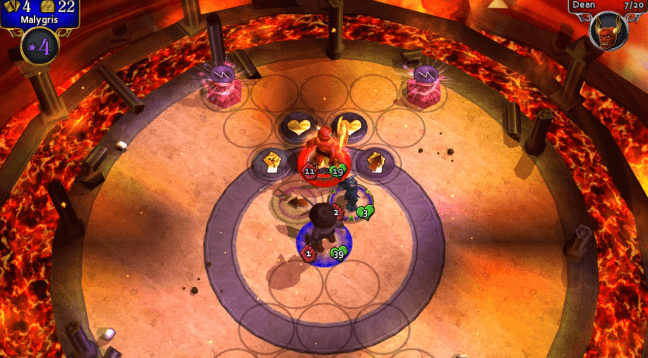
Combat Monsters Review
Combat Monsters, the virtual card battle game with echoes of Magic: The Gathering is now in full release, and if you played and enjoyed it during the beta period, you'll be pleased to know that very little has changed over the past couple of months. And if you haven't, you probably should - it's a fun, challenging strategy card game, and while some of the multiplayer features are lacking, it gets the free-to-play formula right, a rare accomplishment these days.Even if you have only a basic idea of what Magic: The Gathering is, there's no mistaking the similarities between that famous card game and Combat Monsters. In fact, Paul Johnson, the co-founder of Rubicon Development is an "avid player" of Magic, but wanted a video game with a more tactical experience. Thus, Combat Monsters, in which you not only collect virtual cards of various types and abilities and deploy them in single and multiplayer duels, but also maneuver on a 3D game board, complete with special hexes that can amplify your powers - or your enemy's."Combat Monsters is very much an "easy to learn, tough to master" game. You begin by choosing a hero - a warrior, an archer, or a mage - who will serve as your personal avatar, and are then given a basic starting deck with which to play. The bulk of your deck will, initially at least, be composed of various fantasy monsters like orcs, minotaurs, elves, zombies and so forth, each of which belongs to one of the three character classes; there are also cards for weapons, armor, equipment, spells, and magical runes. Some "supplemental" cards only work with specific races or classes, and some monster cards have special abilities that manifest under the right conditions: zombies gain health whenever a monster on the board dies, for instance, while orcs gain an attack bonus for every friendly orc in play.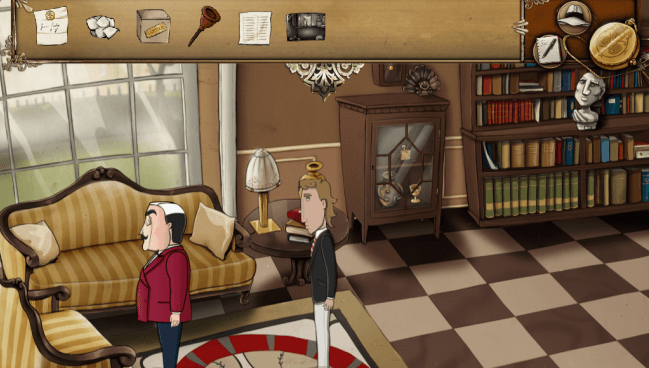
Dream Chamber Review
Dream Chamber is a brand new point-and-click adventure game from Microids that's set in 1930s America, and gives players a highly stylized tale of item collecting and dialogue trees. The storyline itself is par for the course with engaging detective novel fare, and features a cartoony, almost-noir sense of presentation and progression. You play as Charlie Chamber, a wealthy-beyond-words man who's taken it upon himself to try his hand at being a private detective, much to the resistance of the actual private detectives in town. But when a highly publicized museum theft occurs at his girlfriend's latest charity event, Charlie will stop at nothing to make sure that he's the one on the case!It's a very nice setup, and the action moves along accordingly at a pretty fair pace, although most of the characters that populate the game world of Dream Chamber are decidedly unlikable, especially Charlie's vapid girlfriend and the creepy dream version of Charlie named Charles. However, the visuals and sound design more than make up for what Charlie and company might be lacking in the personality department. Everything in the game positively pops with bright and colorful illustrations, and a cool wavy visual effect really accentuates the many dream sequences, in addition to some serious top-notch voice-over talent. The actual gameplay is standard point-and-click adventure in every sense of the word; but the big twist here is that Charlie has the uncanny ability to revisit everywhere he's been in his own dreams, to get a deeper or longer look at some all-important evidence!"For instance, in one scene early on in the game, the inspector working the case accidentally drops a list of stolen items onto the floor of his office. Charlie, being the well-mannered gentleman that he is, quickly bends down to pick up the list and promptly gives it back to the impatient inspector, silently wishing he had more time to look over the items on the list in greater detail. When players return to the dream version of this scene a few short moments later, a glowing stolen objects list rests on the floor exactly where the inspector had dropped it in real life, allowing Charlie to scrutinize its contents now in the privacy of his own subconscious mind. It's certainly an interesting mechanic, and one that serves to accentuate all of the amateur private investigating that you'll be doing by day (NOTE: Just be sure to go into the menu and manually save your game at regular intervals, as Dream Chamber disappointingly does not seem to include any sort of auto-save feature).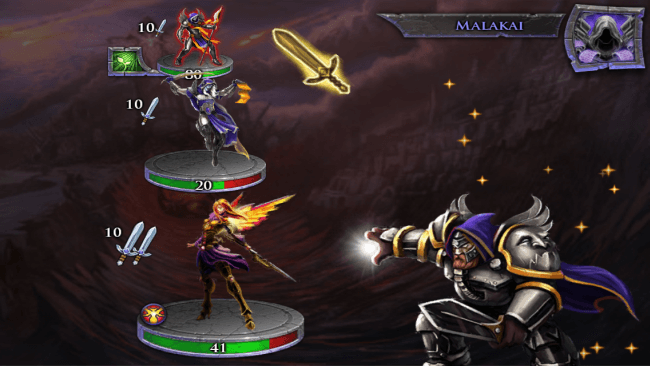
Heroes & Havoc Review
Mobage and free-to-play mobile games have been, and always will be, a thing. On the one hand it means we can pretty much know what to expect before ever loading up one of their titles. On the other hand, all that experience with F2P social game development puts them in a great position to try new things. Heroes & Havoc is one such new thing, for better and for worse.Since it's apparently impossible to develop a freemium fantasy-themed mobile game without a ridiculous story that takes itself way too seriously, Heroes & Havoc casts players in the role of a fallen angel exiled from the heavens for bringing magic to mortals. Then they must gather a band of powerful heroes and fight the gods in order to redeem themselves because "reasons." All joking aside, games like this are never really played for their story, anyway."Mechanically, Heroes & Havoc is a bizarre sort of not-quite CCG. Players gather up heroes, certainly, and they can level-up and learn new skills and spells, but there are no random draws or fusion/evolution elements. Instead, there are several areas (each belonging to a specific deity) that they must fight their way through. Completing all of the battles in one area will unlock a new hero, and that hero can then be powered-up by completing more challenging skirmishes in the same zone.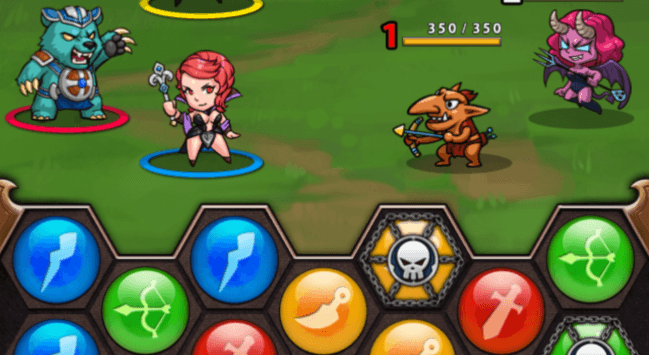
Spirit Stones Review
Generally speaking, match-three gamers don't run with role-playing gamers or trading card gamers, but Gamevil, one of South Korea's largest mobile game publishers, plans to alter that. Aiming to make these mismates mingle, Gamevil brings us Spirit Stones, a new three-genre mash-up that bravely blends bits of match-three, bobs of RPG, and driblets of TCG. Although occasionally brought down by repetition and missing sound and interface elements, Spirit Stones basically blows the doors off, thanks to dynamic deck-building and habit-forming combat.In terms of narrative, Spirit Stones falls on the match-three end of the spectrum—meaning, there's not much of one. The context is a fairly predictable good-versus-evil kind of thing, with you being tasked with using the power of the Ancient Gods (the Spirit Stones) to save the kingdom of Dulaz (a place that really should be re-named "The Kingdom of Busty Women," by the look of its subjects). To attain these powerful stones, you must first fight your way through various lands, past all manner of hostile undesirables. Fortunately, you don't have to do it alone: you get to take a party of your bustiest—I mean trustiest, friends with you."All joking aside, it's hard not to notice the 'amplitude' of your warriors since Spirit Stones has enthusiastically embraced an aesthetic that's highly stripperific. Even so, each card displays a great-looking character that's beautifully rendered, and there are an amazing number of them. (Incidentally, characters, 90% of whom are female, are also rendered in battle as weird—and slightly disturbing—baby-faced-but-boobsy bobble-heads.) Credit should definitely be given since a lot of work was put into creating the gorgeous character art, not only for the base cards, but for their enhanced variants.(The game's sound on the other hand, could use some work. Battle result screens seem to be completely lacking music and sound, and the music loop during battle is nothing short of maddening.)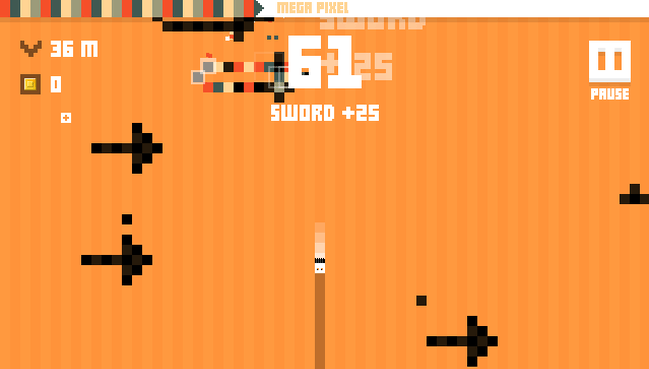
Mega Dead Pixel Review
We've done endless runners, and endless jumpers, and endless shooters, and all sorts of other endless objectives in video games. How about a little bit of endless falling? Mega Dead Pixel tasks you with dropping off a computer monitor, and dodging around the various pixel shapes for as long as possible, pulling off tight maneuvers and collecting other dead pixels that have lost their way in this crazy world.There's something suspiciously compelling about Mega Dead Pixel. While the idea of falling around various pixelated shapes might not sound like such a heavenly idea, I found myself unable to pull away from it for hours. I just had to unlock that next pixelwall, and buy those new shapes, and beat those new missions, and enter that new world, and...That's essentially the entire pull of Mega Dead Pixel in a nutshell - there's just so much to unlock and play around with in this game. But it's also the playful twist on the regular endless runner genre that keeps the game fresh. See, you don't get points for getting as far as possible in this game; rather, it's all about pulling off near-misses and smashing through anything smaller than yourself.If you brush past any object as you fall, you'll gain points. Brush enough pixels and you'll turn into Mega Pixel and begin smashing through the level. Each time you smash into another shape, you'll gain some points and get slightly smaller. If you're the smallest you can get and you hit something, it's game over.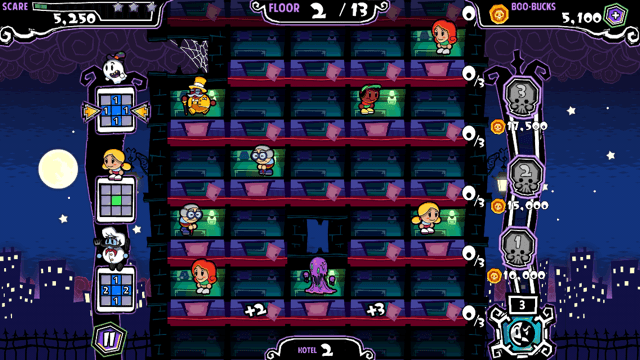
Fright Heights Review
A lot of justifiable complaints are leveled against modern games' obsession with tutorials. Those of us that grew up plugging a cartridge into an NES and then praying for clarity tend to get impatient with hand-holding and long-winded instructions. While brevity is certainly preferable with tutorials, we still need to learn how to maneuver around a title (especially since today's games don't come with printed manuals—remember those?). If we misunderstand a game's mechanics, we might become irritated and put that game down forever.Fright Heights is a rare example of a game in need of a fleshed-out tutorial. It's an initially befuddling puzzle title that provides some cute and creative brain-bending once you get the hang of it - but the learning process is totally on you. Frustration, not ghosts, is what might wind up driving you away from these haunted halls. Look up online tutorials if necessary, and persevere. It's worth it.Fright Heights takes place across several run-down towers that are populated by various ghouls and ghosties. Humans have begun snooping around the area, because our species lacks the survival instinct that helps smarter animals pay attention to big fat "KEEP OUT!!!" signs. It is your duty to set up ghosts and scare away the warm-bloods.Fright Heights is a little bit Sudoku and a little bit Tetris. The right side of the screen is occupied by the multi-level tower, which is essentially your game board. On the left side, there's a line-up of people and ghouls. Each monster is surrounded by different numbers that indicate its scare factor. The location of the numbers technically give the monsters a shape: some have a value above and below, some have values on all side, and so on.